



Dohne carcase and wool profitability shines through to win iconic wether trial
Article courtesy of Outcross Media Kim Woods.
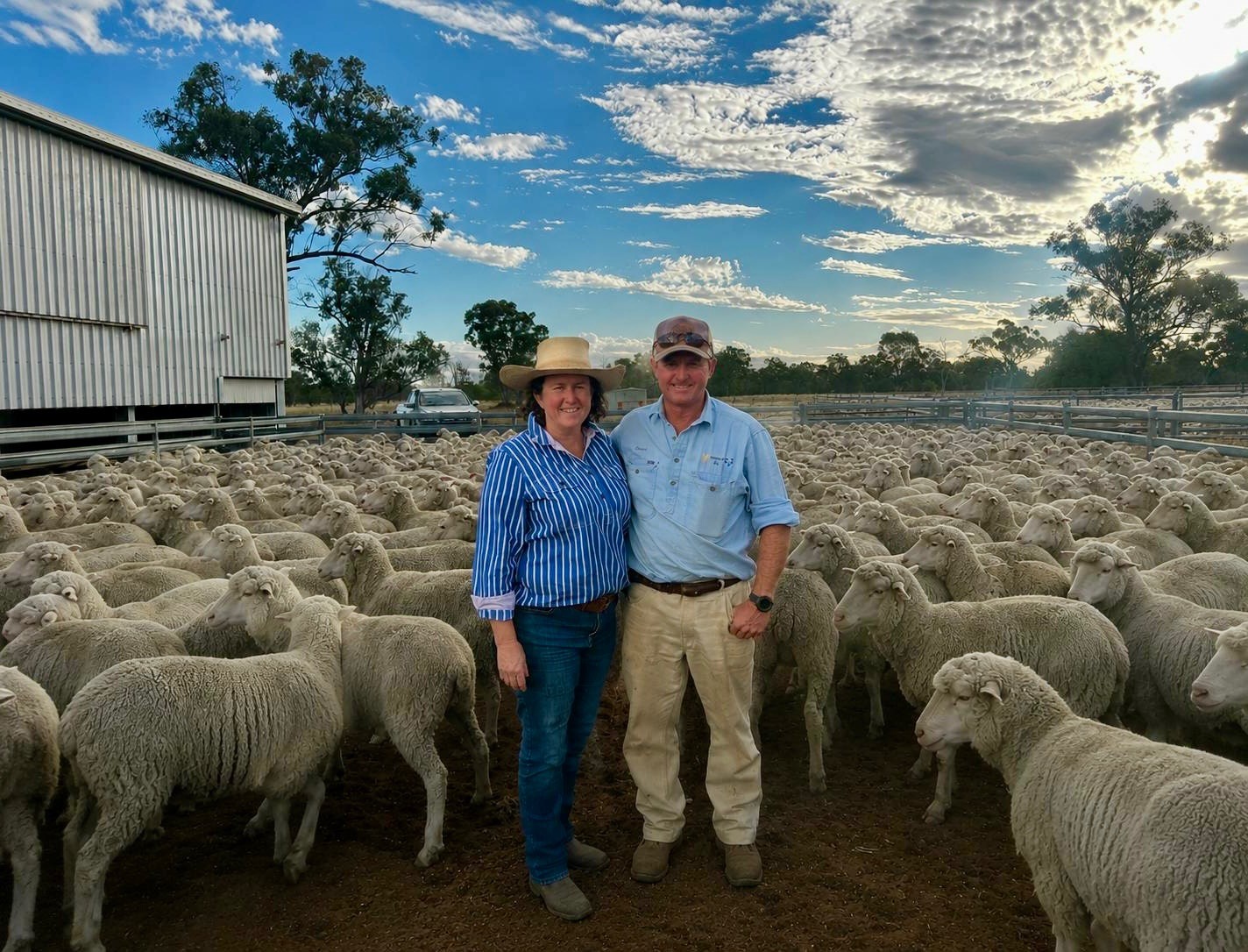
Annie and David Berrell, Midgery Dohnes, Walgett, excelled with their wool and carcase traits to win the prestigious Walgett Show Merino Wether Trial. Image supplied
The dual-purpose traits of wool and carcase gave the Dohne breed the edge to dominate the prestigious 2025/2026 Walgett Show Merino Wether Trial, taking out the overall champion.
The results were announced at the 86th annual Walgett Show on May 9-10 following the shearing of the 16 competing teams in March.
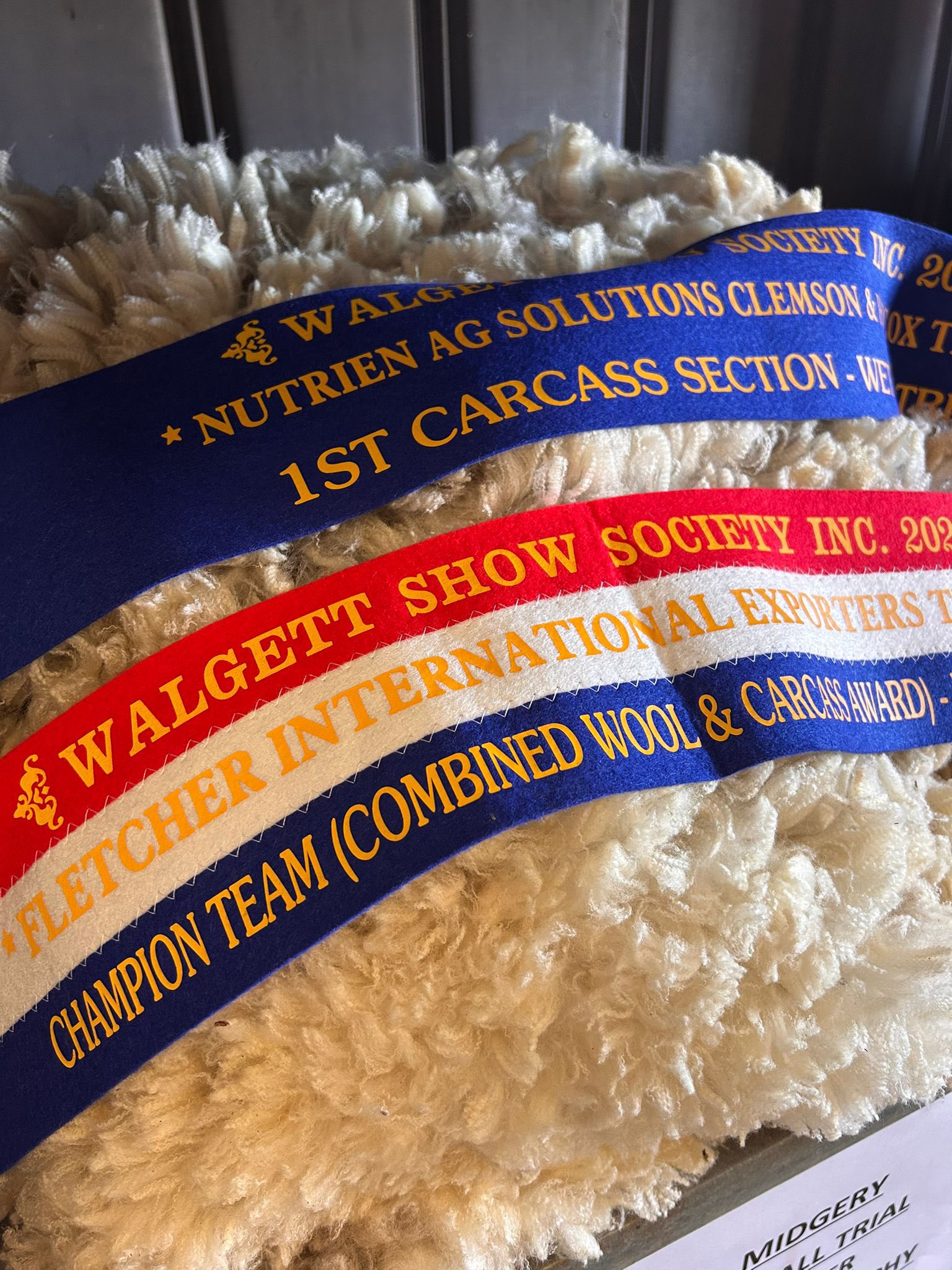
David and Annie Berrell, Midgery Dohne Merino Stud, Walgett, won the Fletchers International Exporters champion team trophy (combined wool and carcase) in what is billed as the nation’s and world’s longest running wether trial.
Midgery also won the Clemson Hiscox & Co Nutrien Ag Solutions Trophy for the carcase class.
The teams of eight wethers were run as a single mob for 12 months at a host property at Carinda before visual and objective data collection at shearing and slaughter. The scores from the top six sheep in each team were collated to determine the placings.
In second place was a team from Mark and Caitlin Currey along with Mark’s parents, Jim and Sue Currey, Bogewong Butcher Co, Walgett, reinforcing the Dohne breed’s wool and carcase quality and consistency.
Both teams were classed by Australian Dohne Breeders Association approved classer James Koster.
Originally established as a means of raising money for the local show and starting with just eight teams representing two bloodlines, the wether trial is now considered the longest running event of its type, held continuously for nearly 50 years.
Away from the trial in the show classes at Walgett, Calga Dohnes, Coonamble, won the Bairnkine Trophy for pen of two rams and two ewes; the Dunumbral Trophy for grand champion ram, Robert Campbell trophy for champion two tooth ram; and champion March shorn ewe.
David Berrell said the transition from Merinos to Dohne at Midgery had paid off with higher lambing percentages, foraging ability and hardiness.
The Midgery spring drop lambs averaged $89.64/head for their wool and including their meat value of $294.83/head, the wethers returned $384.47/head.
“The trial is a great way of benchmarking our flocks – for this trial the lambs were grain fed and the Dohne’s carcase traits emerged to win overall,” he said.
“At the end of the day the trial is about identifying the most productive animal.”
The Berrells run Macquarie Dohne blood ewes averaging 19.5 micron and cutting 6kg, with an aim to breed a traditional dual-purpose animal for wool and carcase attributes.
“We can compete on the wool floor with the Merino wool – fleece weights are not as high but all the other attributes of brightness, length, strength and micron are comparable to a straight Merino,” Mr Berrell said.
The Midgery ewes have averaged 136 per cent lambing for the past 15 years. Lambs are either pasture finished or grain fed to a carcase weight of 26kg plus.
Placing second in the trial, the Currey family has been breeding Dohnes for over 20 years and purchase auction grade rams selected on a combination of objective measurement and visual traits. This was the third win or place for the family in the trial.
They are benefiting from the high fertility and growth rates, bare breech, early maturity, adequate fat cover and carcase eating quality combined with 20-micron wool since switching to Dohnes.
In addition, the family value adds their Dohne and Dohne cross lambs through their own farm to plate butcher shop, Bogewong Meats, in Walgett.
Jim and Sue Currey run 4500 self-replacing Macquarie Dohne blood ewes at Carinda and Brewarrina, covering 18,000ha. The August /September drop lambs are finished on pastures and stubble, or lofted in drier seasons, to either supply the butcher shop or sold over the hooks as a 28-32kg carcase.
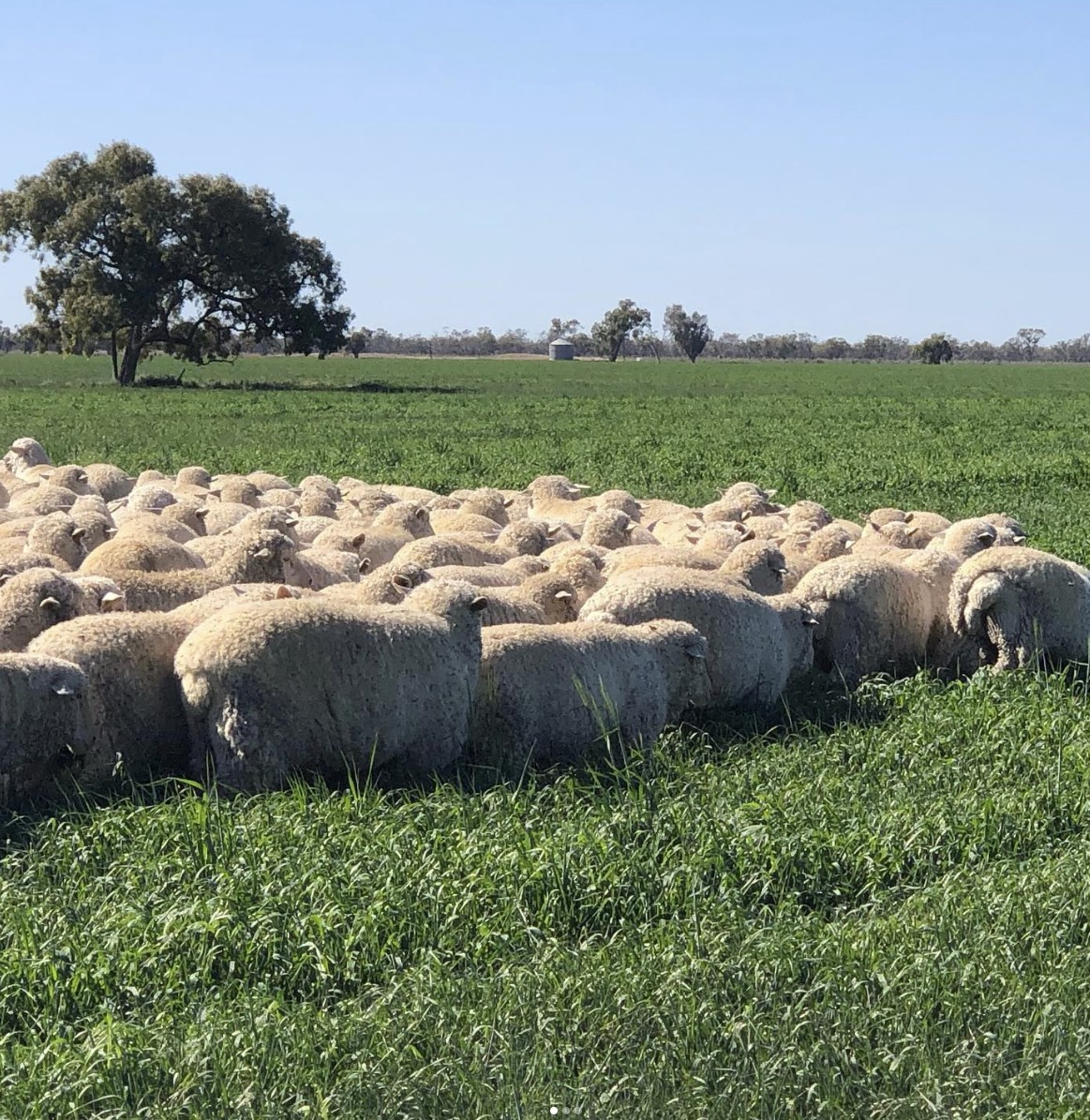
Currey family Dohne wether lambs on oats.
Mark and Caitlin also run 1200 Dohne ewes joined to Border Leicester rams, with the majority of the autumn and spring drop lambs finished to a carcase weight of 25-28kg for the butcher shop or local hospitality trade. Around 600 lambs are either pasture or grain fed to supply the shop each year.
Mark likes the consistency of product achieved off grass or grain, with the good growth rates, feed conversion, fat cover, yield and eating quality from the 10-month-old lambs.
“We aim for nice bright wool with staple length on a good carcase – they are a dual-purpose animal with the frame and fertility naturally inherit so we focus on getting more weight and staple length in the fleece,” Mr Currey said.
Their Dohne ewes average 20 micron with a fleece weight of 5.5kg as a two-tooth hogget.
“The ewes are good forages and average 130 per cent lambing. We haven’t mulesed for 15 years since grading up from a Merino base and we now have an early maturing lamb to fatten off grass or in the pen keeping income streams diverse,” Mr Currey said.





 Facebook
 Twitter
 YouTube
 Instagram