



Banker-turned-farmer reveals how Dohne sheep underpin his farm’s year-round cash flow
Weekly Times by Fiona Myers Aug 28, 2026
It’s crops that buy farms but sheep that keep them operational according to southern NSW farmer Matt Mills.
And with 12 months under his belt after returning to the family operation near Balldale NSW, after studying at Marcus Oldham and following a career in banking, he’s bringing a financial lens to the mixed farming business.
Matt and his parents Don and Karen run a stud and commercial Dohne operation alongside their cropping program in 525mm country north-east of Corowa.
Don first brought Dohnes into the operation in 1999, seeing their ability to be true dual purpose sheep that could capitalise on both wool and meat returns.
The stud operation, Kardinia Dohnes, evolved and sells about 100 rams a year, but it’s the commercial results that have Matt excited about their contribution to the bottom line.
SHEEP PROFIT
With wool prices lifting and meat returns on a several-year stellar run, it’s allowed the Dohnes to kick goals in terms of profit.
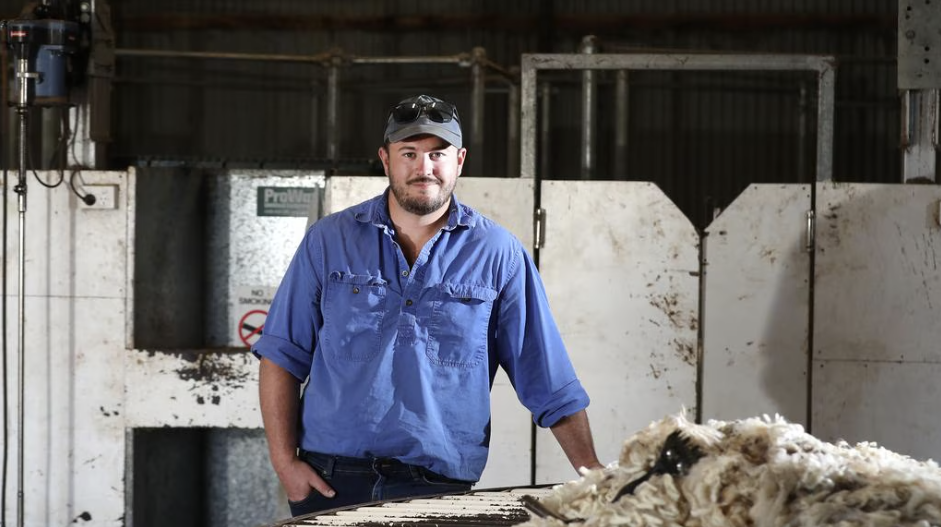
Matt Mills at his family property “Kardinia”, Balldale, NSW, likes spreading the risk from having sheep and cropping in the mix. Picture Yuri Kouzmin
The flock averages 19.5 micron from adult sheep, producing a wool cut of a bit under 5kg from a once-yearly shearing.
“It’s not the highest wool cut, but Dohnes were bred from a Merino so it is high quality wool,” Matt said.
The self-replacing flock of about 1800 ewes, 500 of which are stud ewes, is joined in January to lamb down in June.
Mature ewe weights sit at between 65-80kg, and lambing percentages usually come in at about 115 per cent.
The best of the ewe lambs are retained to keep in the flock, which Matt said “makes the balance sheet look a lot better”.
“If you are not in a self-replacing situation, and have to go out continually to buy replacement ewes, then it’s costly, let alone not really knowing the performance of those sheep,” he said.
“And with a Dohne, not only do you have a self-replacing flock but you also have one that earns income from wool, so the young breeders are productive and generating profit even before they have lamb.”
The wether portion is sold into the lamb trade, at about 10 months. Born in June, the goal is to have all off the property by the end of April.
Lambs are shorn in January, and off shears gain enough weight and grow enough pelt to suit the processors skin length requirements.
WEIGHT GAIN
They are run on stubbles through summer, picking up leftover grain from harvest, and are then trail fed in paddocks to boost weight gains.
Most lambs are sold direct to Gundagai Meat Processors, where Matt welcomes the carcass feedback which gives a barometer on the performance of their stud flock. Some of the best lambs sold well in excess of $300 in the past season.
The lambs usually go in at between 55-65kg liveweight, and many fit into their GLQ+5 bonus program which earns additional rates per kilogram for intramuscular fat.
But some of the lambs run into a problem – they yield too well.
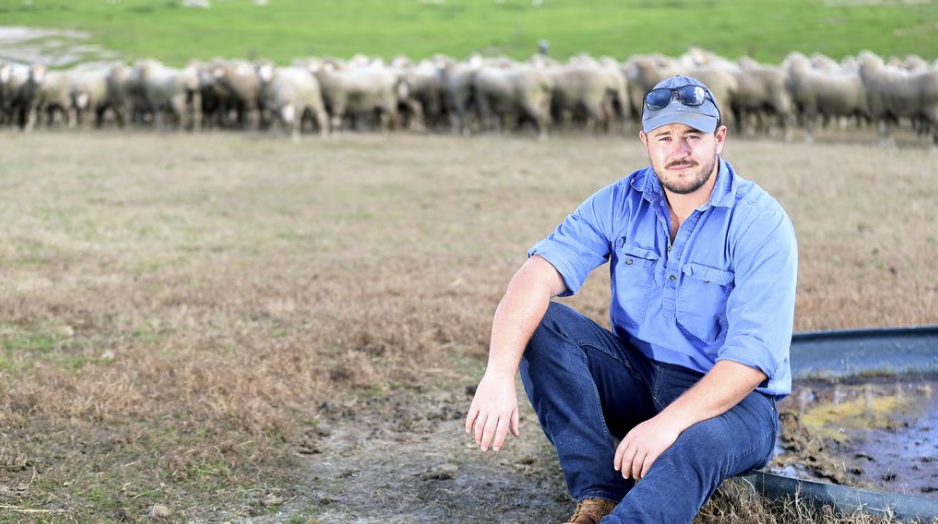
Matt Mills likes the diversity that cropping and livestock brings to the income mix. Picture Yuri Kouzmin
“We can hit the targets for marbling and for fat cover but we have had some lambs that have yielded up to 70 per cent,” Matt said.
“It’s something we need to tweak, but knowing we have the IMF that can add to eating quality is really important.”
The Mills use electronic tags in their sheep and are using the carcass feedback provided by GMP to fine tune their breeding operation.
“We know that IMF is something that is generally laid down later in the lamb’s life, and see that our later (older) consignments of lamb generally have higher IMF levels,” Matt said.
“What we are trying to do is isolate the genetics where IMF is laid down earlier and follow those stud lines to be able to offer this in our rams.”
BUSINESS MIX
The ability to maximise returns from sheep means Dohnes stack up financially for Matt’s banker business brain.
And the regular cash flow, from sales of old sheep, lambs and wool, mean they also tick the box in that respect too.
The sheep are run alongside a cropping program of about 600-800ha, of which about 120-200ha are grazing wheat crops. These provide a feed wedge in winter, before being locked up if there is enough rain to take on for grain harvest.
“The grazing provides returns from the dual purpose wheat crops and there’s every chance we will harvest them and still get 3-3.5 tonnes of wheat per hectare,” Matt said.
“You won’t get the Australian Prime Hard wheat classification but even feed wheat can generate another return from the paddock,” he said.
One paddock is sown for oats to generate feed for the sheep, while one-third of the barley is retained in case supplementary feeding is required. If this is not needed, this barley is then sold.
It’s hardly surprising that Matt has done the sums on how each part of the mixed enterprise performs given his experience in banking, and said the vagaries of prices meant the returns from cropping and sheep ebbed and flowed.
The Mills have deliberately kept sheep in the mix, despite many in the district moving to 100 per cent cropping in 2020-21 when returns were exceptional.
They are happy they stuck with sheep though, especially given the results of the past couple of seasons.
“With crops, you have very expensive inputs especially in the past two years,” he said.
“This compares to the sheep which have lower input costs, especially with the Dohnes where even the wool from the lamb shearing covers the costs of the process.
“Cropping is hard on cash flow and sheep have multiple income sources.
“But the profits in a good year from cropping are what buy farms but the on-going returns from stock are what keep farms operational year after year and add a layer of risk protection to the volatility of cropping returns.”




 Facebook
 Twitter
 YouTube
 Instagram