


November Newsletter 2026

Sign Up to receive Dohne Newsletters – Click Here
Sign Up to become a Dohne Member – Click Here
Full Newsletter – PDF Copy
World Dohne Merino Conference and Tours Report
The World Dohne Merino Conference in South Africa brought together international delegates, breeders and industry representatives to discuss the future of the Dohne Merino breed. Although international attendance was lower than expected, the eight Australian delegates received a particularly warm welcome from their South African hosts.
The Australian presentation provided an overview of the Australian Merino industry and the influence of Dohne Merino genetics on the Australian Poll Merino. It highlighted challenges facing the breed in Australia, including the loss of recognition for Dohne Merino genetics, rising shearing costs, competition from shedding breeds, low wool prices, drought and the profitability of cropping. However, there was optimism about the future, with improved seasonal conditions, stronger wool and meat prices and the need to rebuild Australia’s sheep flock. Rising input costs, partly driven by the conflict in the Middle East, have prompted mixed farming operations to look at rebuilding and expanding their sheep flocks, leading to increased demand for replacement ewes.
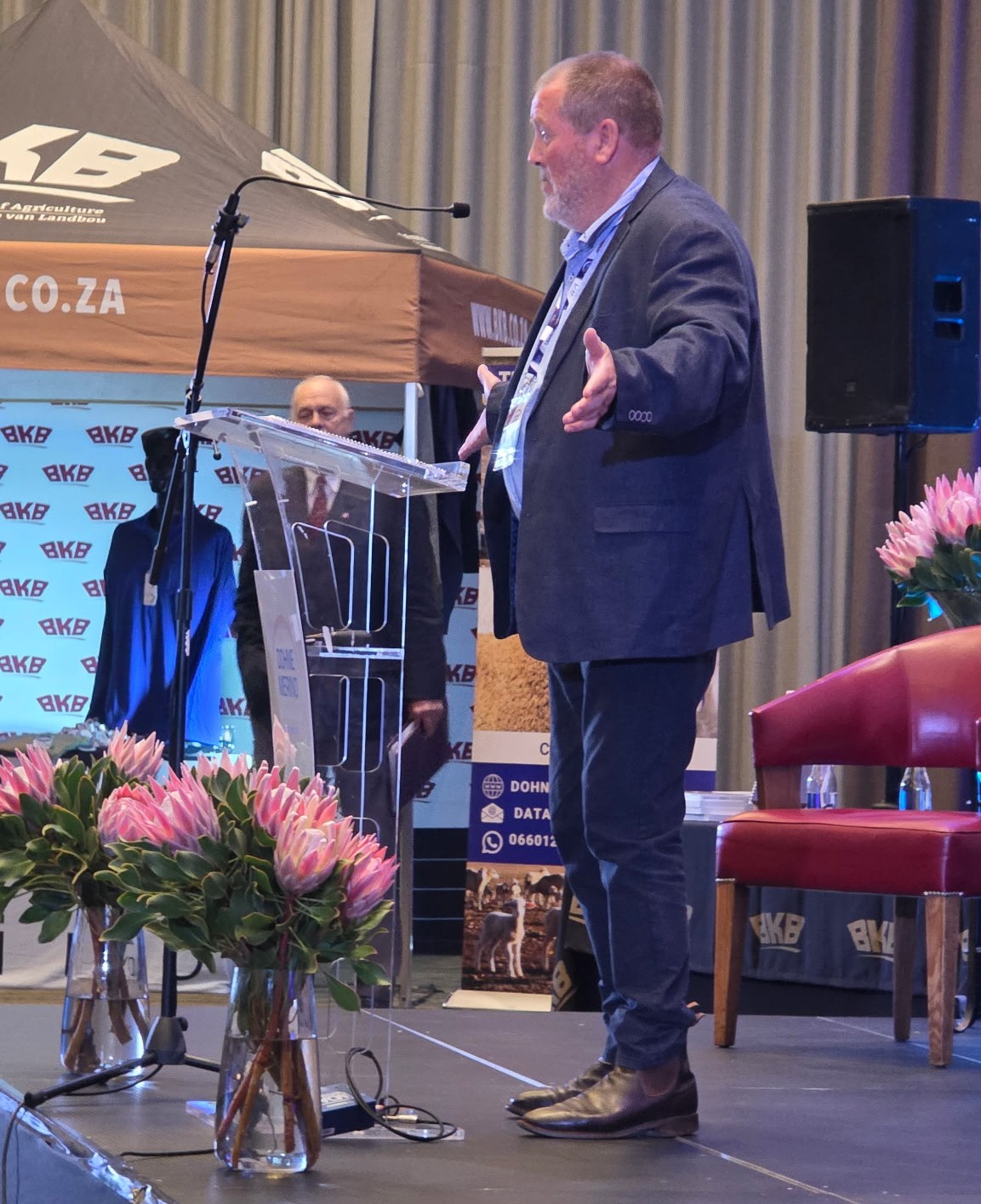
Greg Hall presenting the Australian Dohne Merino story and thanking the South Africans for their warm welcome and wonderful hospitality.
Dr Daniel Brown, from the Animal Genetics and Breeding Unit at the University of New England, Armidale, NSW, Australia, was a keynote speaker at the conference, presenting on the topic “Dohne Merino: The Economical Breed for Challenging Times”.
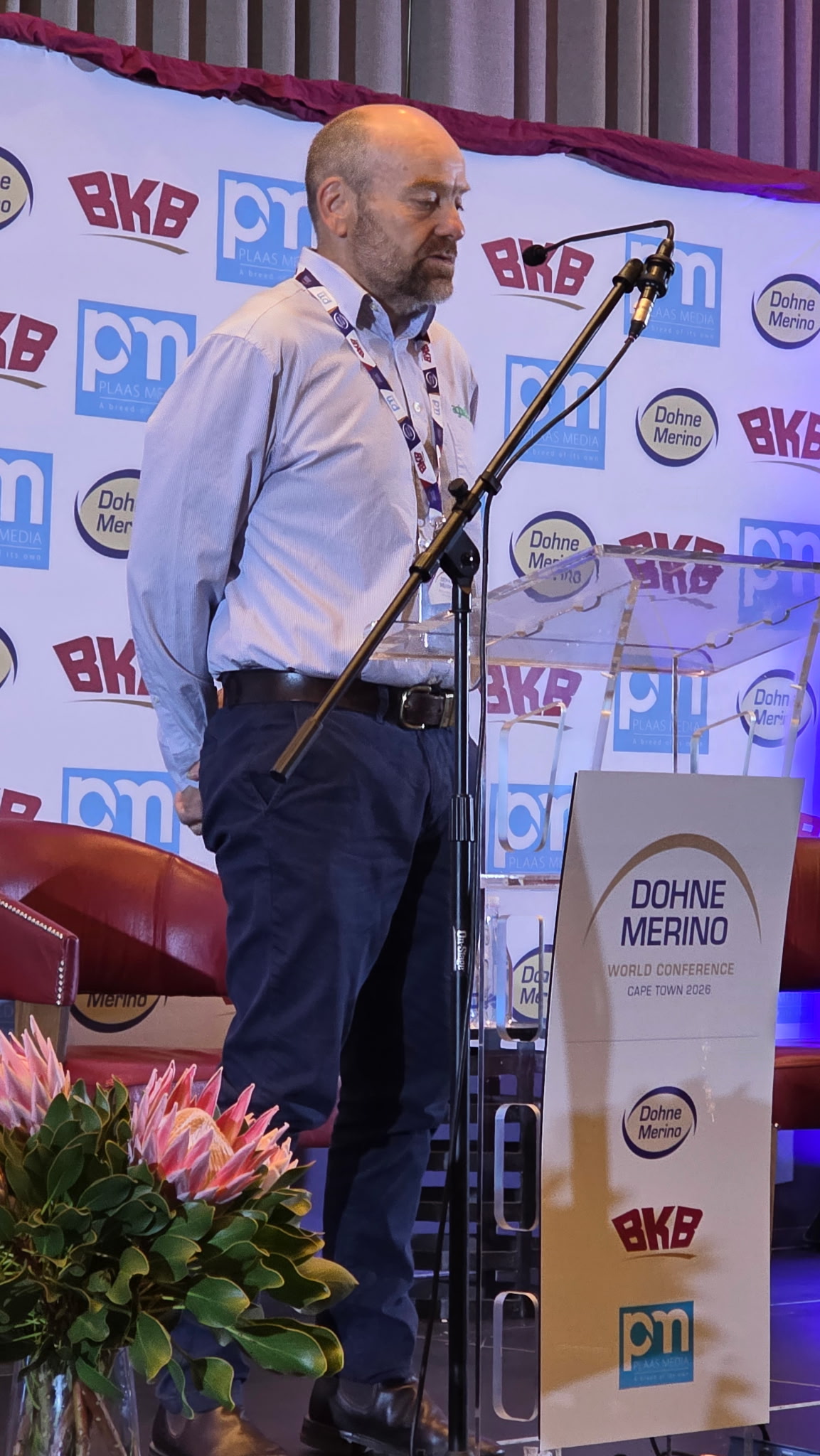
Dr Daniel Brown AGBU Keynote speaker presentation.
Allen Kelly presented on Australian Merino Sire Evaluation (AMSEA) trials and the importance of genetic linkage, while the conference also highlighted the importance of educating and encouraging the next generation of breeders through the work of the ADBA. In particular, the NSW Dohne Prime Lamb Schools Competition and the Dohne Merino Education Program at the Australian Sheep and Wool Show (ASWS) in Bendigo.
An informal discussion with Dries Pienaar also provided an opportunity to explore the future of the breed in both countries.
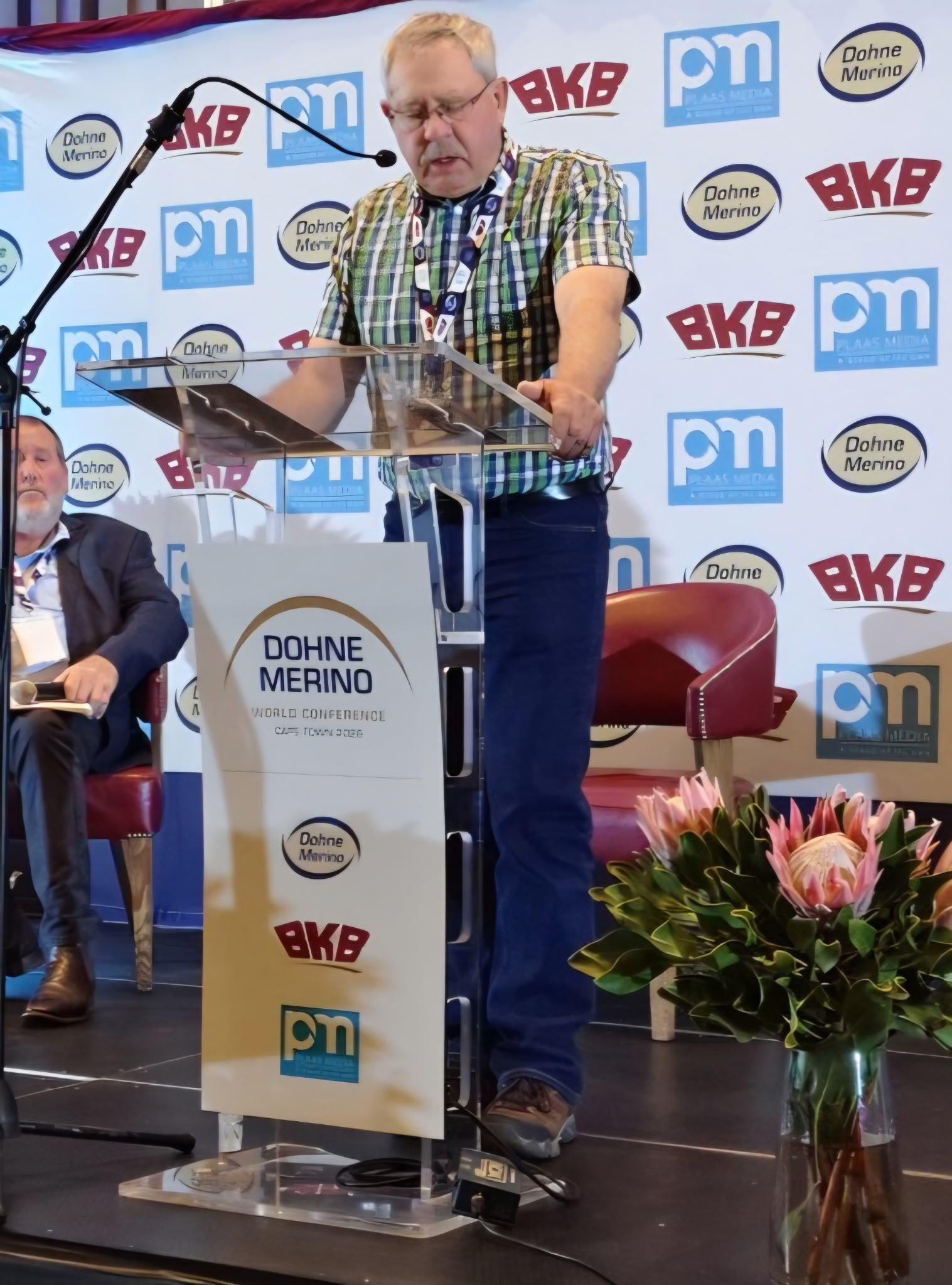
Allen Kelly presenting Dohne involvement in Australian Merino Sire Evaluation.
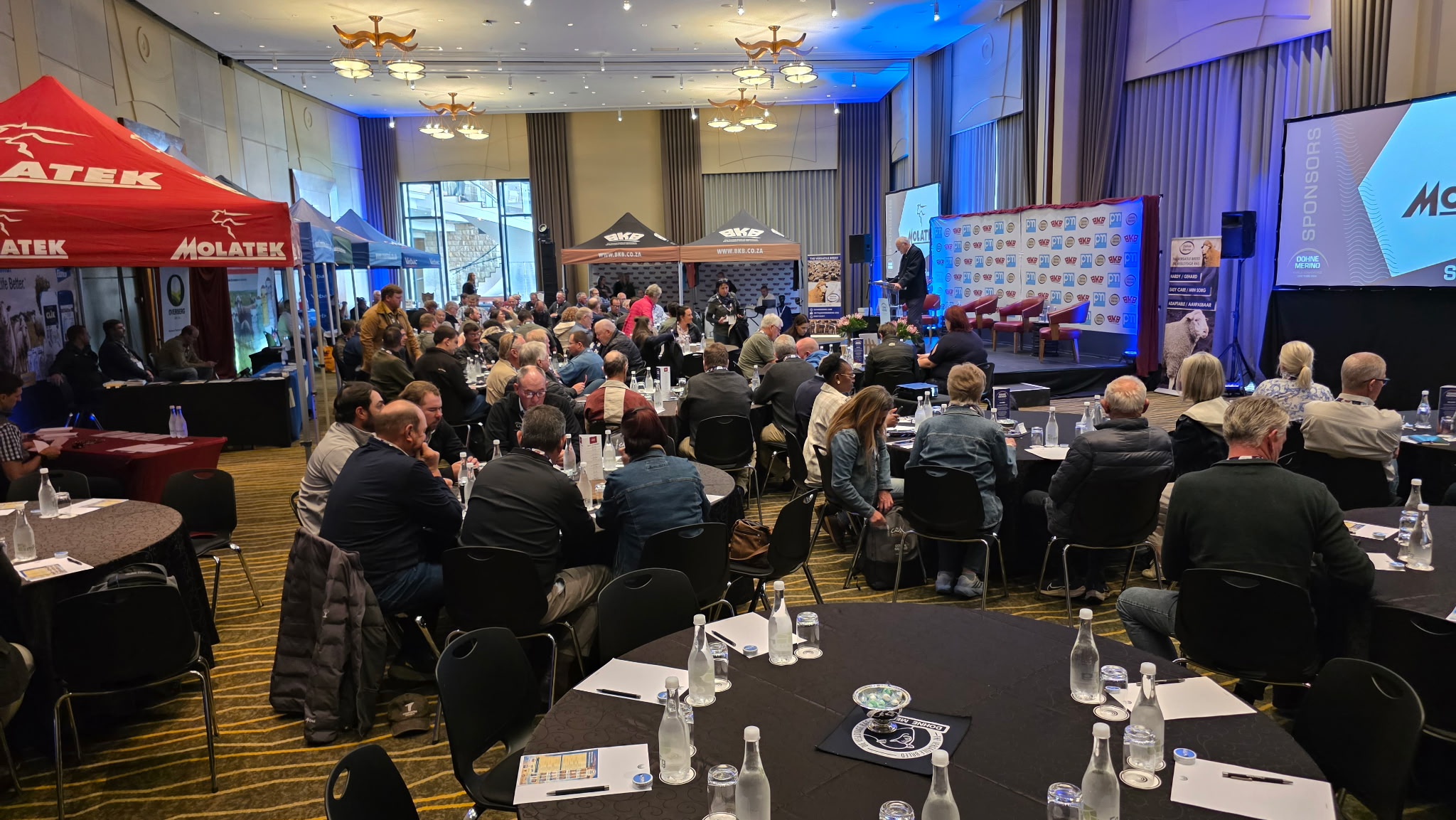
World Dohne Merino Conference in South Africa.
Similarities and Differences Between the Industries
Many aspects of South Africa’s agricultural landscape were remarkably similar to Australia. The Cape Town region shared similarities with South Australia’s Clare Valley, particularly its vineyards, rainfall and productive cropping country. The Free State and Karoo pastoral regions also resembled Australia’s drier grazing areas, including similar native grasses and vegetation.
Despite these similarities, there were significant differences in farming practices and economics;
- The Dohne Merino accounts for approximately 80% of South Africa’s sheep flock.
- South Africa has approximately 21 million sheep, including 13.5 million Merino-type sheep, compared to Australia’s current flock of approximately 50–60 million sheep.
- Mulesing is considered unethical and is not permitted. The majority of the Merino flock is registered under the Responsible Wool Standard (RWS).
- Labour is considerably cheaper, with farm workers often living on-farm with their families.
- Sheep theft and security are major concerns, particularly near urban areas.
- Working dogs are rarely required, with most farms instead using hunting dogs to control predators such as jackals and caracals, which have historically caused losses of 30–40% of newborn lambs. Head stockmen often work on horseback, with motorbikes rarely used.
Sheep Production and Marketing
South African sheep production places considerable emphasis on meat (70–80%), with wool accounting for 20–30%. Wether lambs (hammels) are often sold at weaning, weighing 28–32 kg, generally to feedlots where they are finished to 50–55 kg for chilled meat exports to the Middle East. Tails are left intact to avoid setbacks in weight gain. However, the large domestic market accounts for the majority of sheep meat consumption.
The industry also benefits from additional markets for skins, heads, tails and offal, while biltong (dried, cured meat) remains a popular product in South Africa.
The annual Dohne Merino National Sale is a major event for stud breeders. Rams are generally 2½ years old and have already been used within their home studs before being prepared for sale. This system encourages the widespread use of sires across multiple studs, creating valuable genetic linkage throughout the breed.
Family Farms and the Next Generation
One of the strongest impressions from the visit was the quality of family succession and the long-term relationships between farmers and their employees.
Many farms had been in the same families for three to six generations, with some employees also having over three generations of family history on the property. Workers often lived on the farms, with homes, gardens and sometimes schools provided.
The younger generation of farmers, generally aged 25–40, appeared enthusiastic, innovative and committed to the future, with new approaches to diversification and marketing.
Stud flocks typically comprised 300–500 ewes, supported by commercial flocks of 2,000–4,000 sheep.
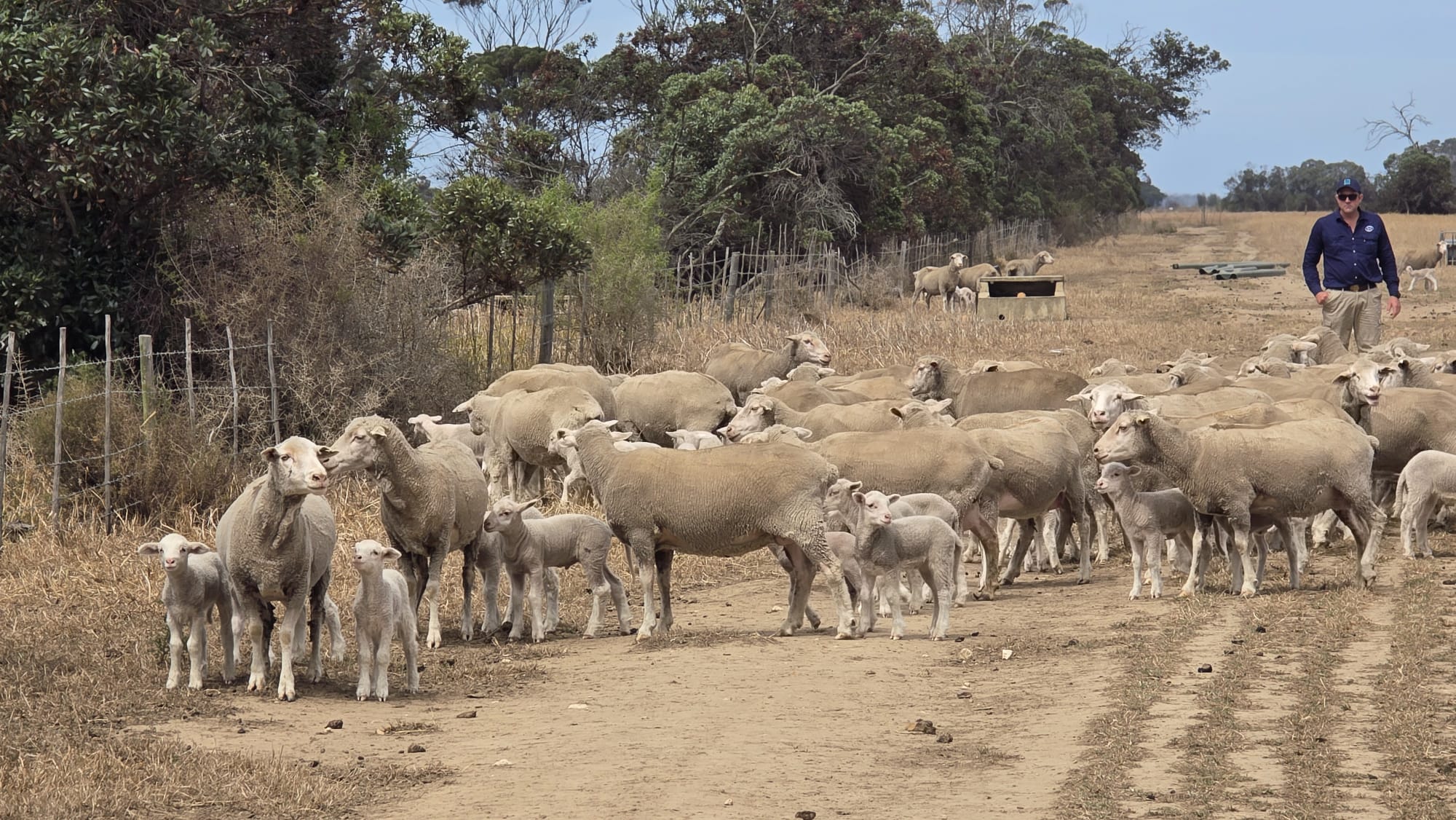
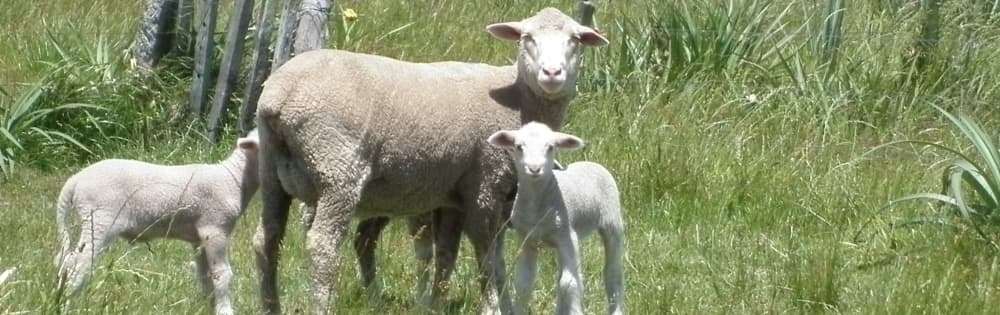
Dohne ewes and lambs.
Hospitality and Future Opportunities
The hospitality shown by South African farmers was a highlight of the trip. Between 50 and 80 local farmers often joined the first week’s visits, while subsequent stud visits attracted more than 30 local farmers, neighbours and industry representatives.
The experience provided an excellent opportunity for Australian and South African breeders to exchange ideas, compare production systems and strengthen international relationships.
Overall Conclusion
The trip reinforced that while Australian and South African Dohne Merino breeders operate in quite different economic, environmental and social conditions, they share many of the same challenges, ambitions and passion for the breed.
The most valuable outcomes were the exchange of knowledge, the strength of family farming traditions, the enthusiasm of younger breeders and the friendships developed through the conference and farm visits.
The central message is that although the two countries farm differently, their commitment to improving the Dohne Merino and securing its future is remarkably similar.
Greg Hall Former ADBA President
Conference and Pre-Conference Tour Journey
Sunday 18 October – Arrival in Cape Town
The Australian delegation arrived in Cape Town and attended a welcome dinner at the Lagoon Beach Hotel, hosted by representatives of the South African Dohne Merino Society.
Monday 19 October – Spansaam, Deli-Co and Corsando Dohnes
The first day of farm visits included Spansaam Angus and Dohne Merinos, where delegates observed electronic identification and individual ewe performance recording. At Deli-Co, the group toured a family-owned lamb-processing and retail operation that has grown from processing one lamb per week in 1993 to approximately 4,500 daily. The afternoon concluded at Corsando Dohnes, a diversified farming enterprise incorporating 6,000 Dohne ewes, vineyards, cropping and beef cattle. Interestingly, this farm has invested in its own feed pellet plant, resulting in improved feed conversion efficiency.
Tuesday 20 October – World Dohne Merino Conference, Day One
The first day of the conference at Arabella Resort featured presentations on the development of the Dohne Merino breed, genetic improvement, sheep production and farm management. The evening concluded with a traditional South African braai (barbeque).
Wednesday 21 October – Conference Day Two and 60th Anniversary Gala The second day featured presentations covering regenerative agriculture, wool sustainability, community farming initiatives and international agricultural issues. That evening, delegates attended the 60th anniversary gala celebration of the South African Dohne Merino Society, where John Morris of Terra Vino Dohnes, was named 2026 Top Breeder of the Year and presented with the new Virbac Top Breeder Trophy.
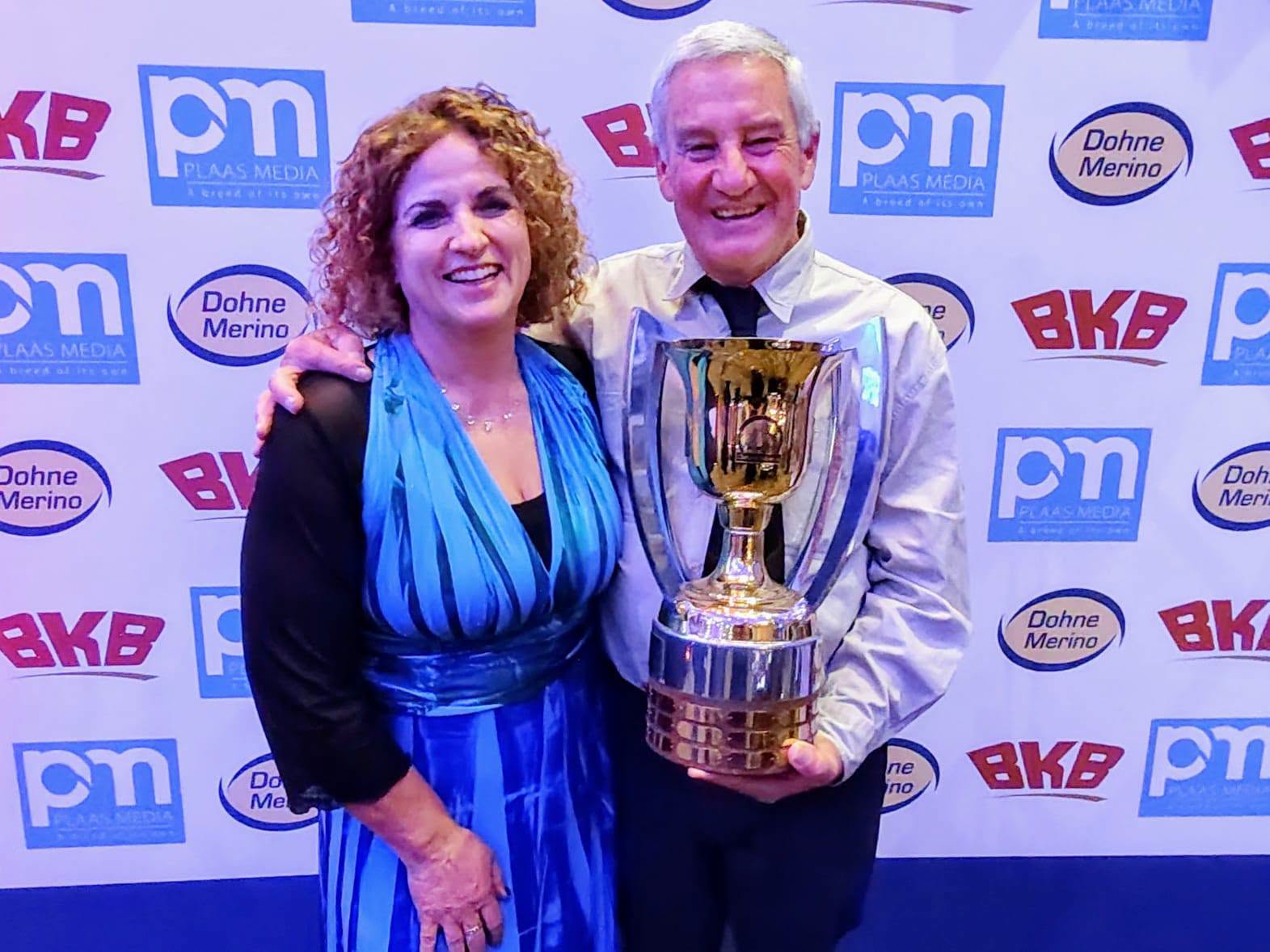
John Morris of Terra Vino Dohnes, pictured with his wife Karin, was named 2026 Top Breeder of the Year and presented with the new Virbac Top Breeder Trophy at the gala dinner during the World Dohne Merino Conference.
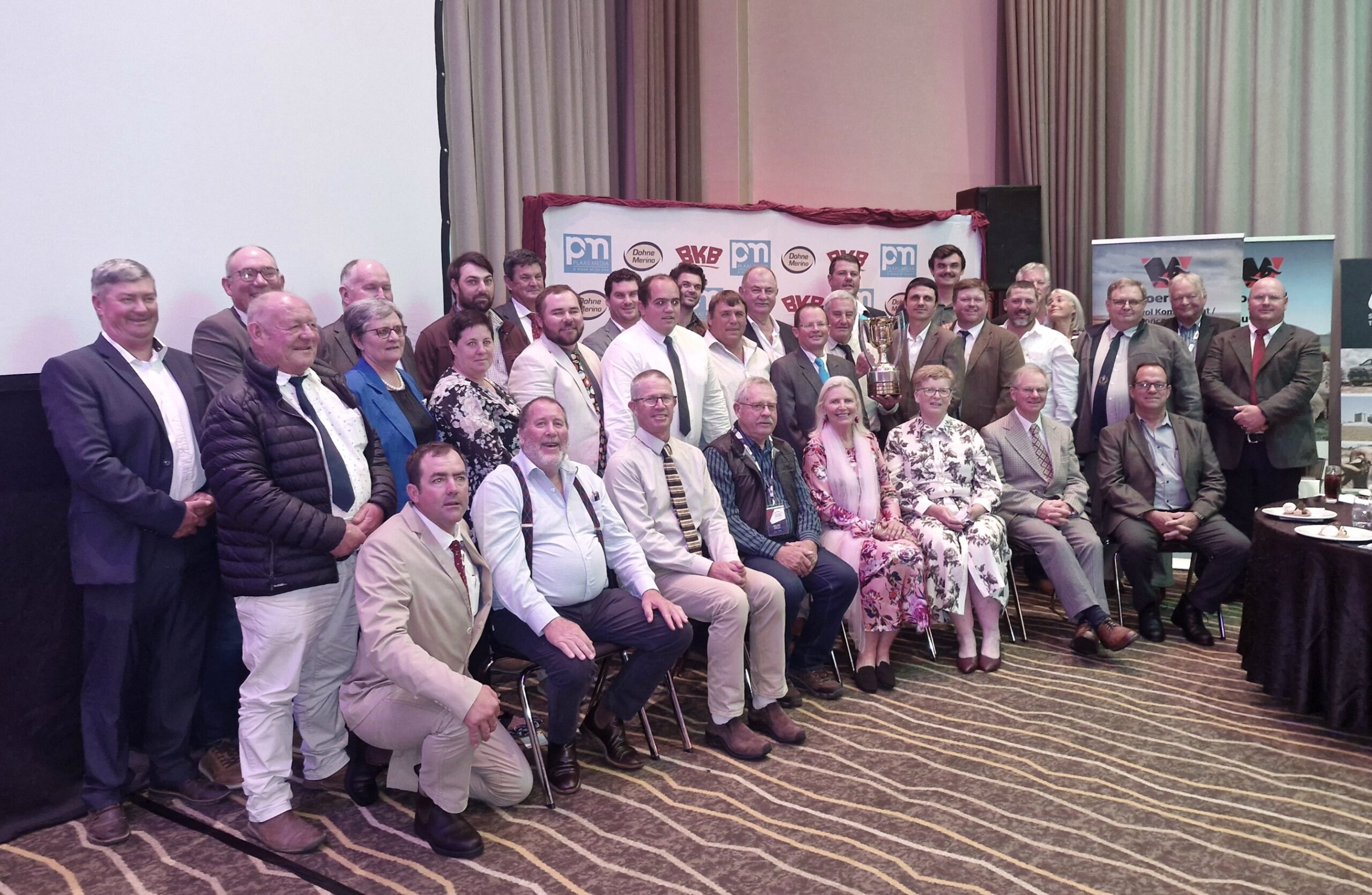
Australian and South African delegates celebrate with John Morris following presentation.
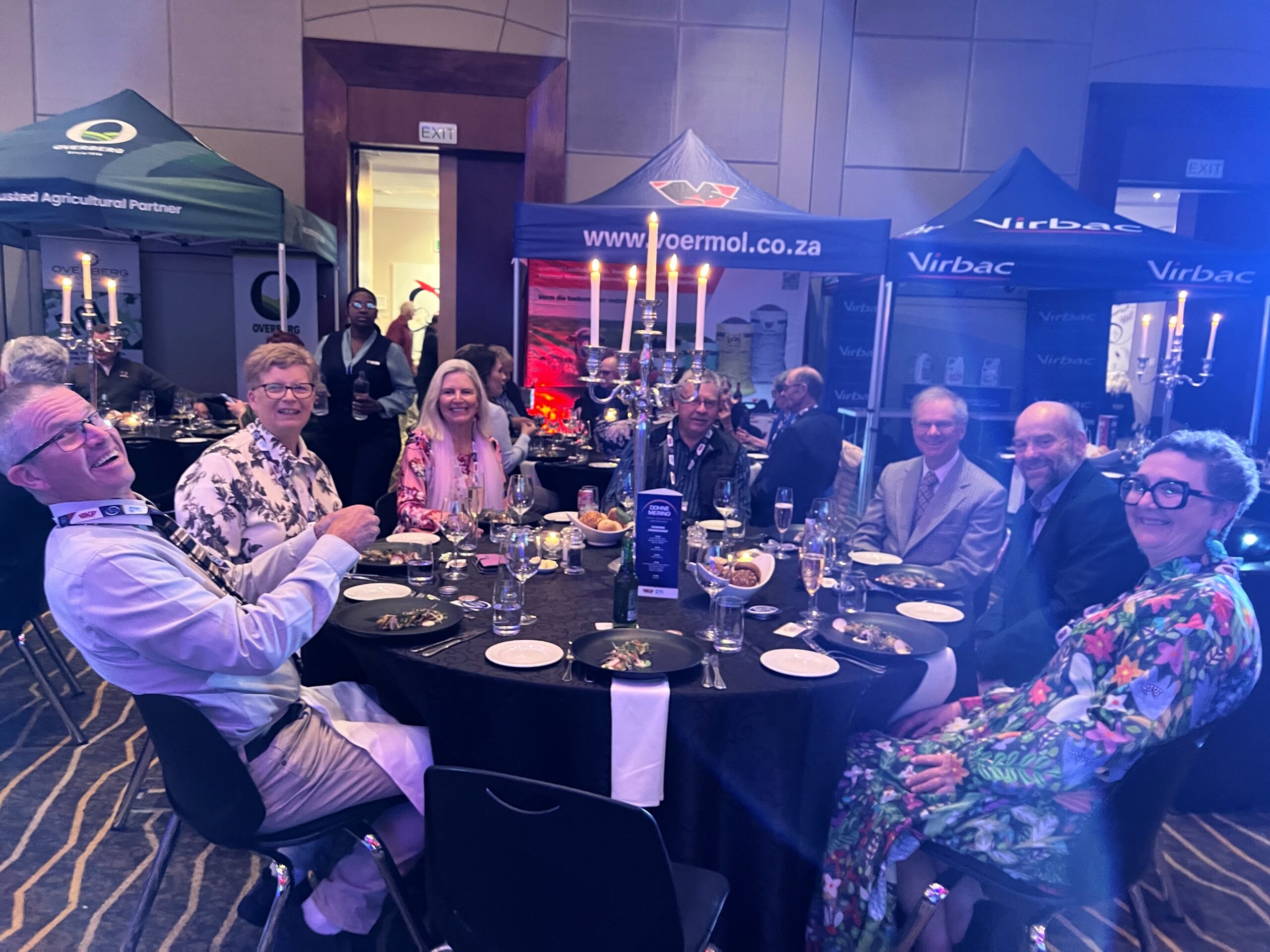
Australian Delegates, Darren and Fiona Cameron, Margie Pye, Allen Kelly, John Buxton, Daniel Brown and Liz Hall, at the Gala Dinner.
Thursday 22 October – Boontjieskraal, Weska and Potberg Dohnes
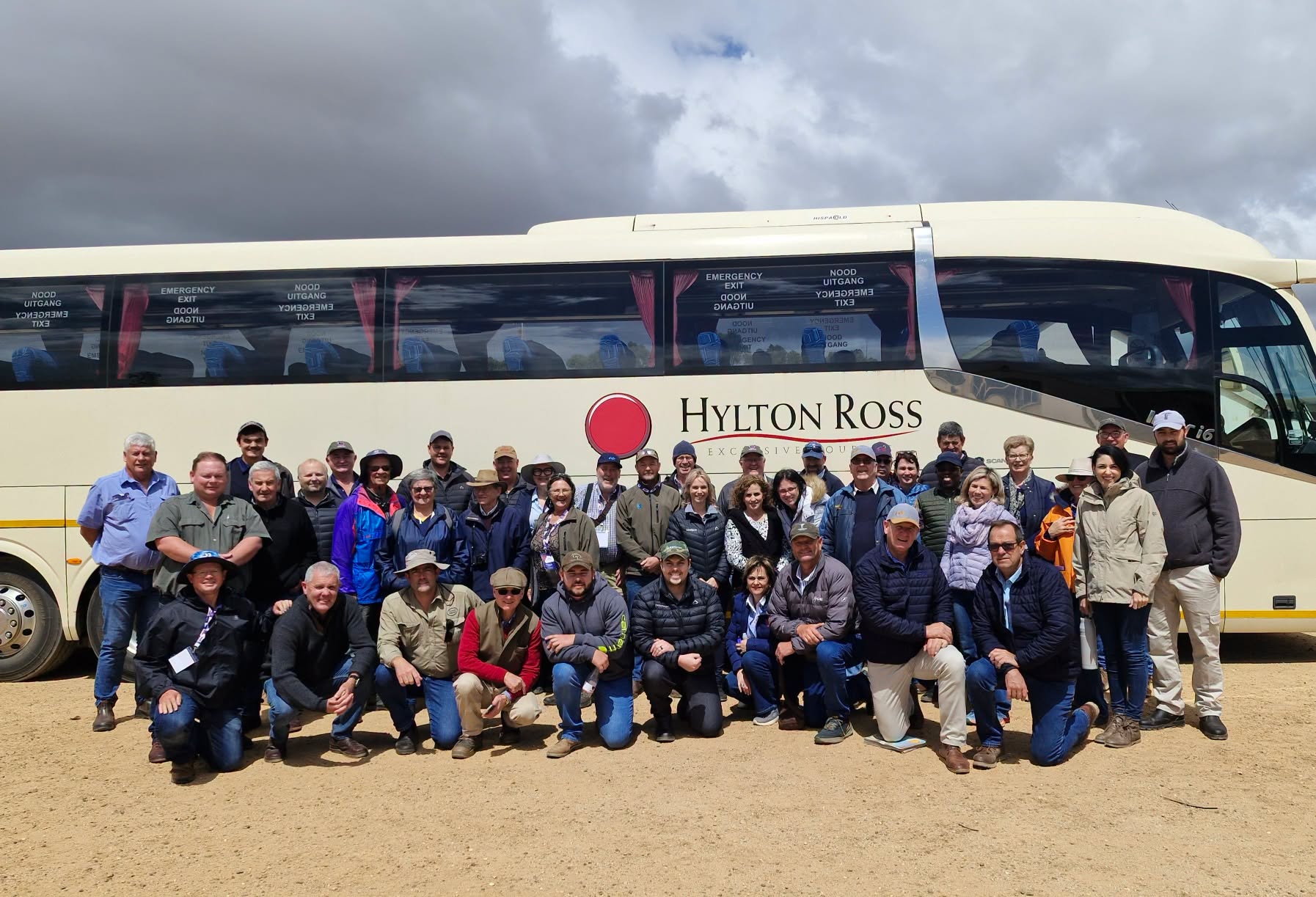
Australian delegates joined by South African farmers during the World Dohne Merino Conference stud visits.
The delegation travelled through the Overberg region, visiting Boontjieskraal Landgoed Estate, an historic family property dating back to 1779.
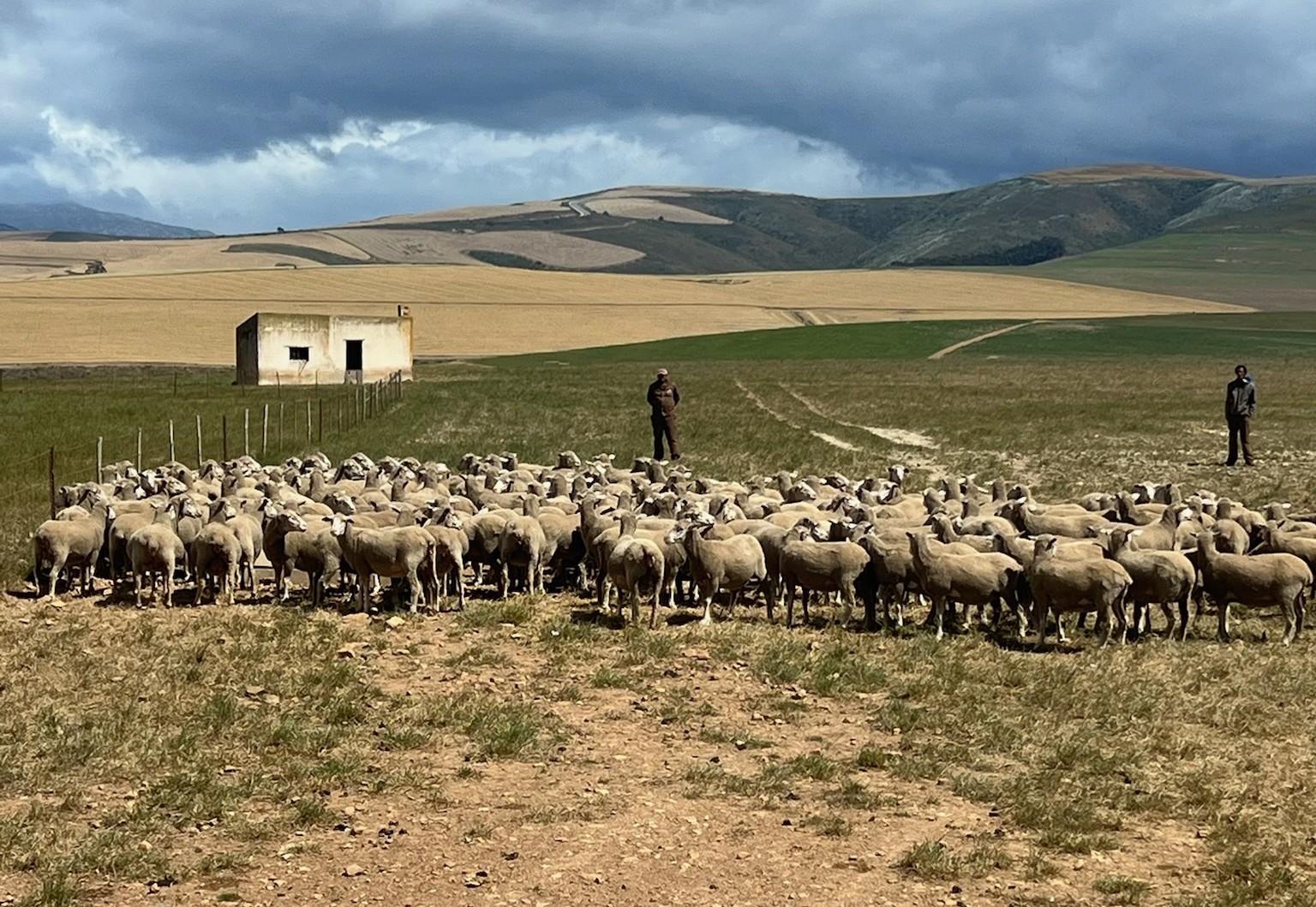
Dohne ewes on display at Boontjieskraal Landgoed Estate.
The afternoon included visits to Weska and Potberg Dohnes, where delegates inspected stud sheep, including young rams producing fine wool and above-average fleece weights.
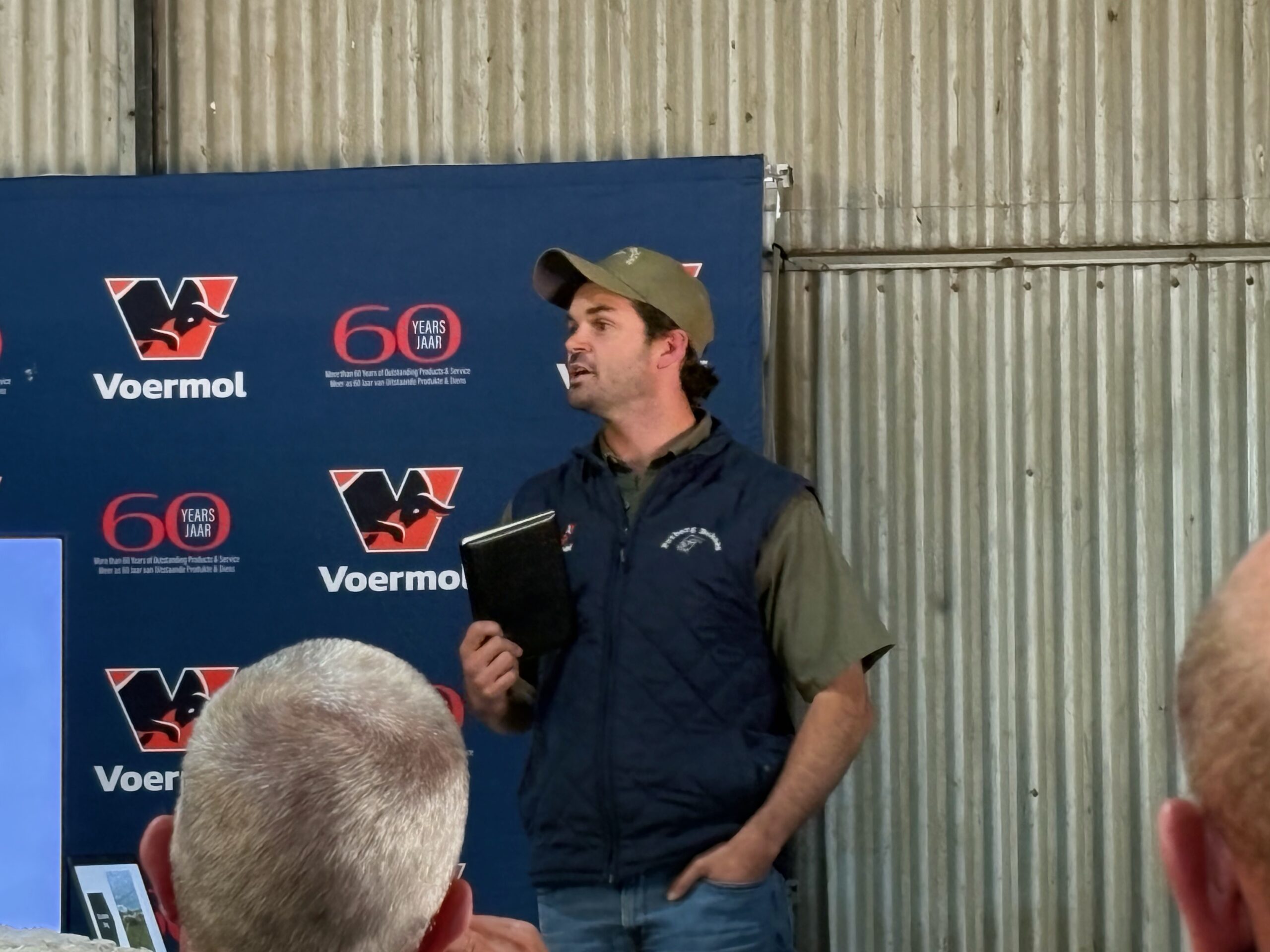
Dirk du Toit presenting to delegates on behalf of Potberg Dohnes.
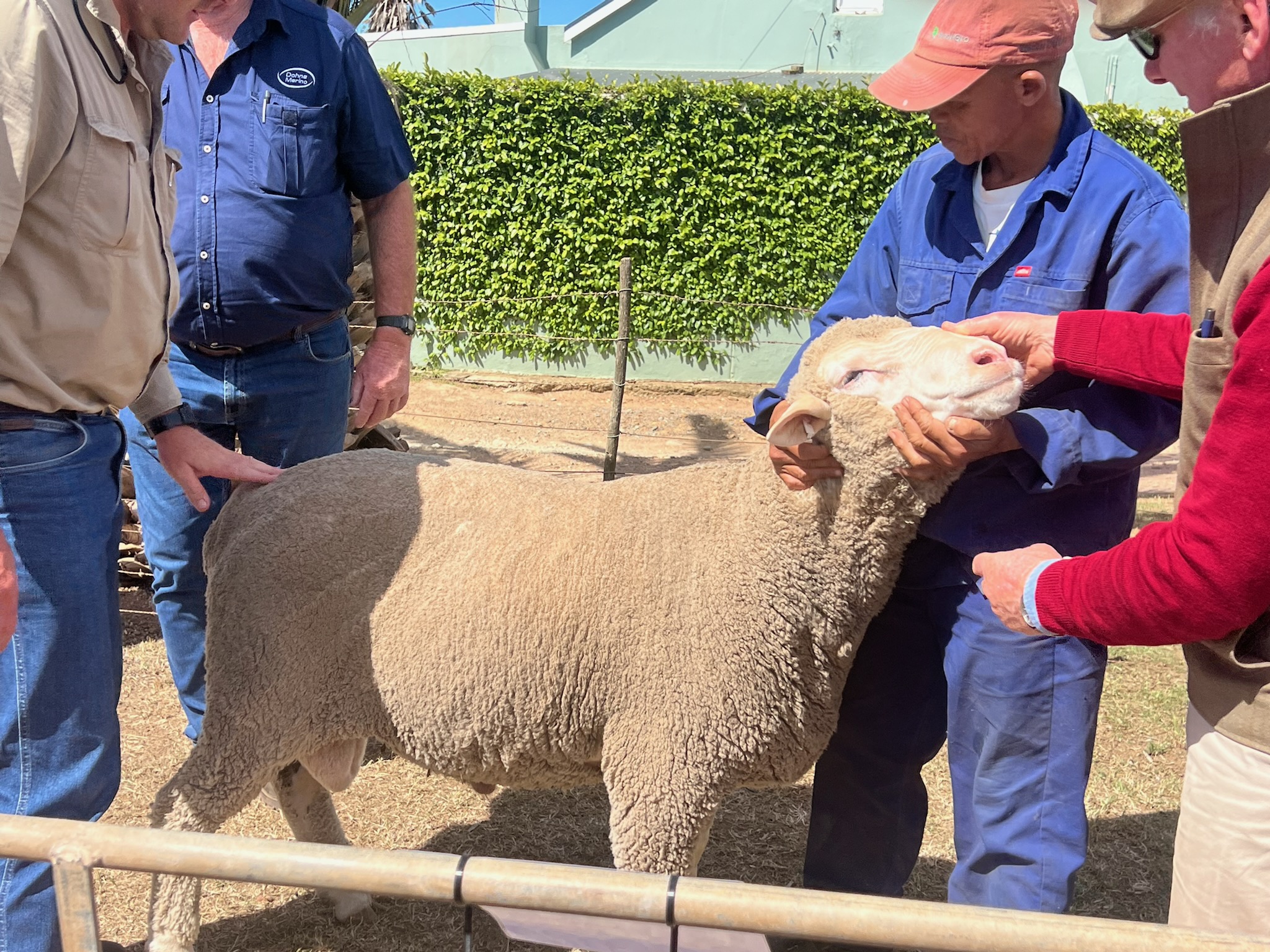
Delegates inspecting stud rams during their visit to Weska and Potberg Dohnes.
Friday 23 October – Commercial Farming and Shearing Visits to large commercial farming operations south of Bredasdorp included Nachtwacht, where delegates observed South African shearing practices. The group also made a detour to Cape Agulhas, where the Indian and Atlantic Oceans meet, before spending the afternoon in the coastal town of Hermanus. A highlight was a memorable seafood lunch at Bientang’s Cave restaurant, overlooking the ocean.
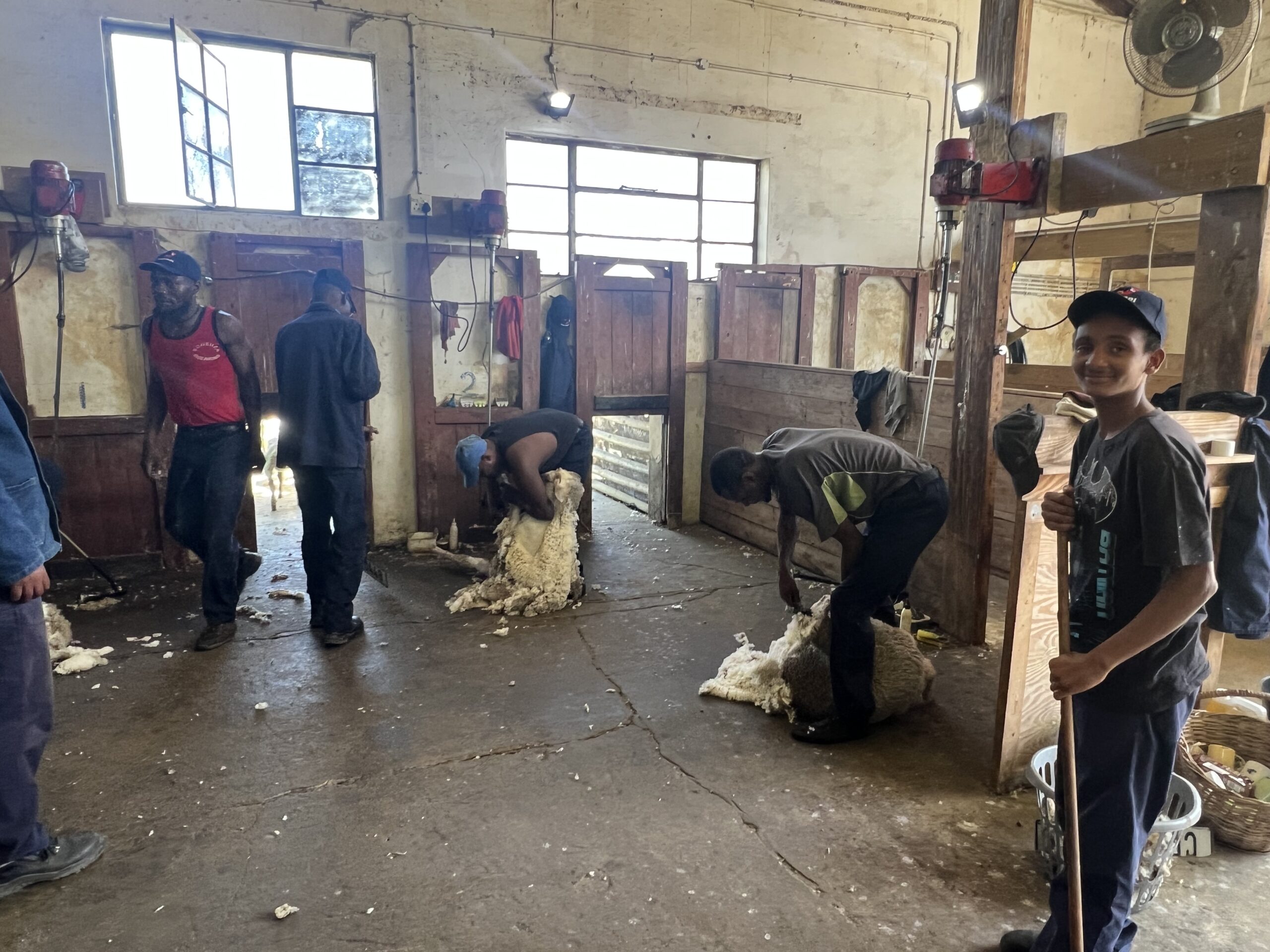
Delegates observed South African shearing practices in action.
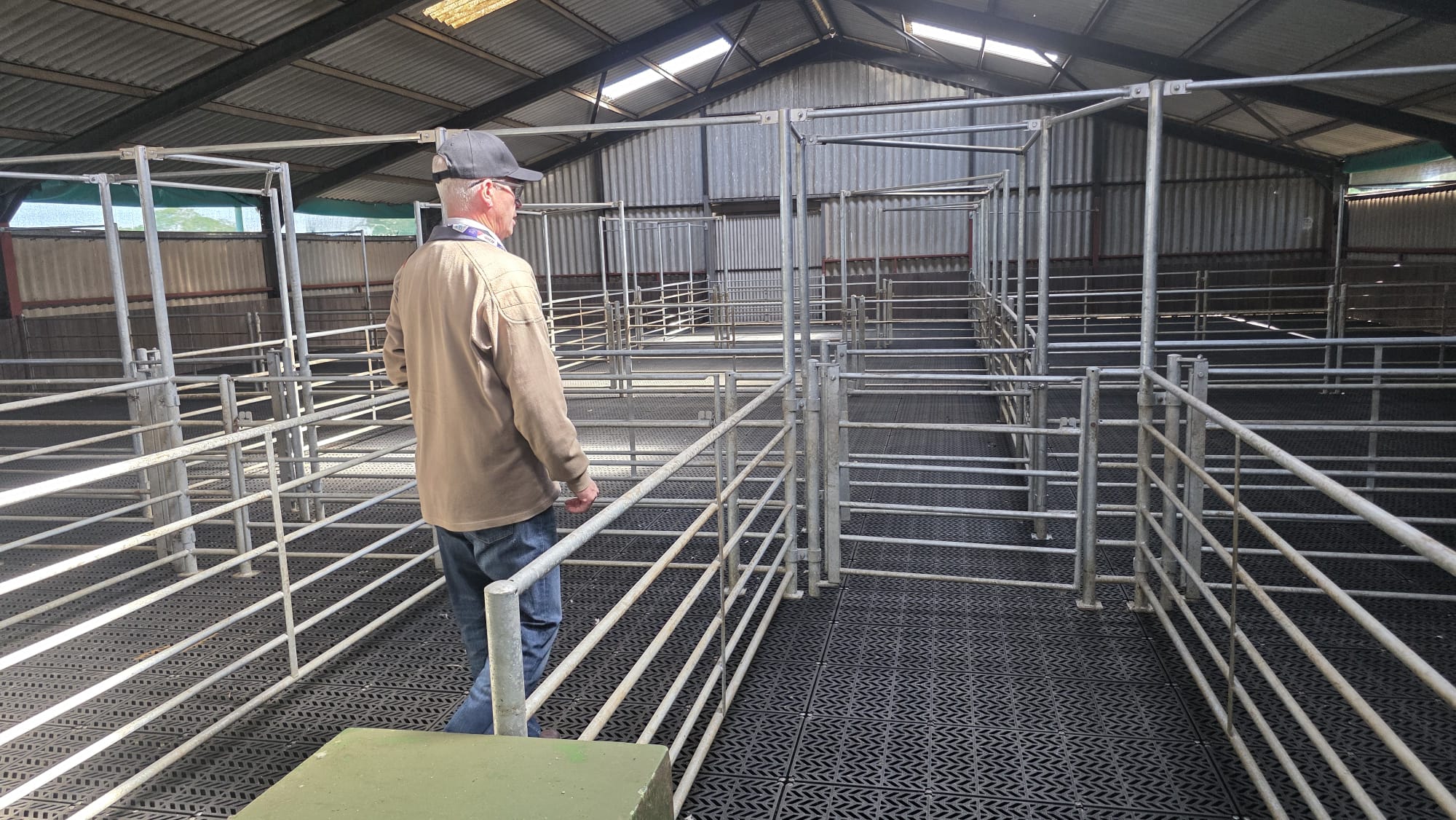
Darren Cameron inspecting the new pens and flooring, which had been imported from Australia.
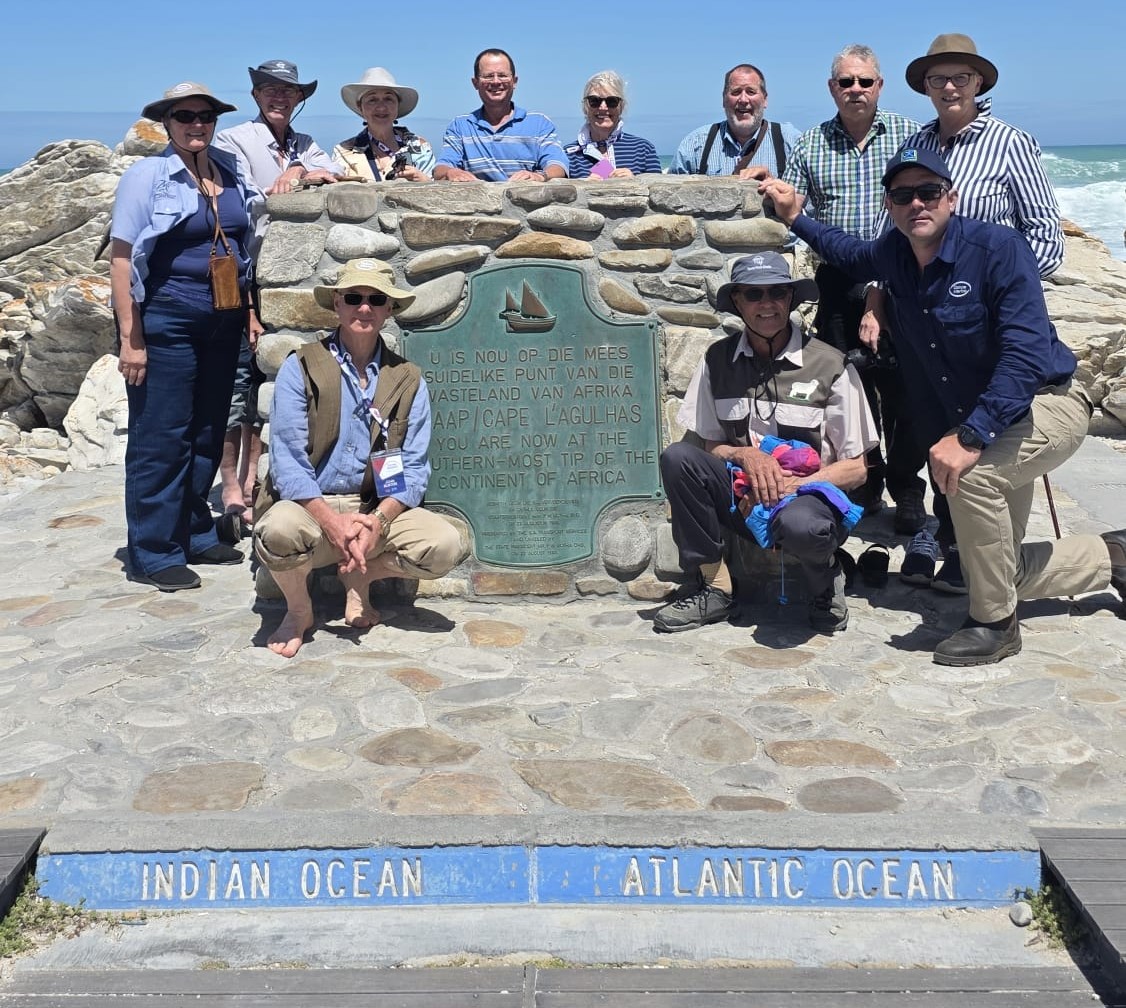
Australian delegates visiting the spectacular point where the Indian and Atlantic Oceans meet in South Africa.
Saturday 24 October – Sightseeing
A day of sightseeing took the delegation along the scenic Clarence Drive, with a visit to a renowned wine estate for lunch and a drive through Stellenbosch University. On the return journey to Lagoon Beach, the group farewelled several South African hosts who had accompanied them throughout the tour.
Sunday 25 October – Cape Town to Bloemfontein
The delegation travelled to Bloemfontein, beginning the second stage of the tour through South Africa’s inland sheep-producing regions. On arrival at the airport, the group was welcomed by Vaughan Collier, Manager of the South African Dohne Merino Breed Society, who would serve as their tour guide for the following week.
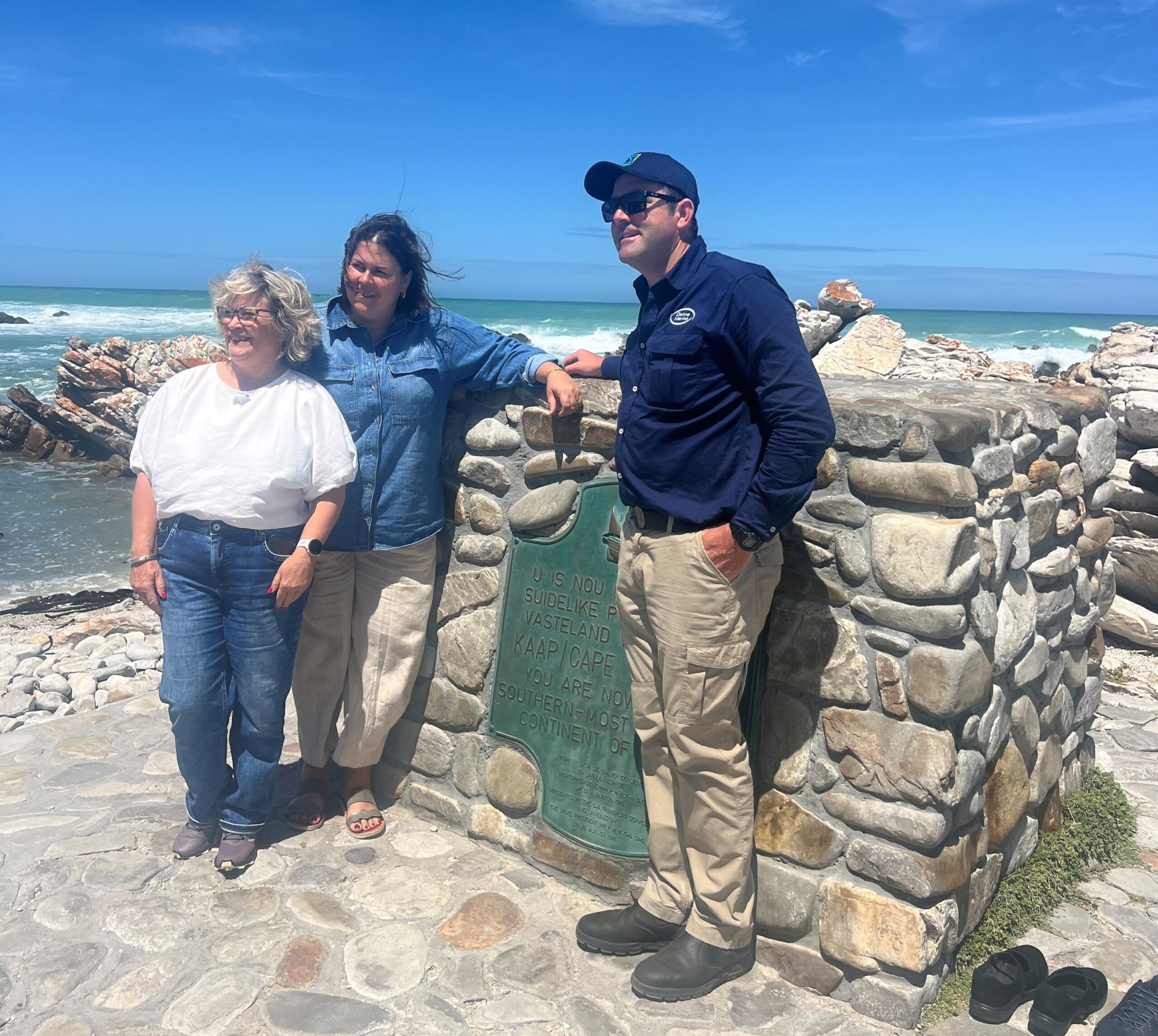
Vaughan Collier with his wife, Annike, and Ina Viljoen, who coordinated the conference logistics.
Monday 26 October – RAMSEM, South African Stud Book and De Oude Kraal The group visited the RAMSEM Artificial Breeding Centre, inspecting semen collection facilities, laboratories and reproductive technologies. A visit to South African Stud Book provided an insight into the country’s pedigree and livestock performance recording systems. The evening was spent at the historic De Oude Kraal guesthouse, originally built in 1863, where delegates enjoyed old-world luxury and an exceptional four-course dinner. We sincerely thank our South African hosts and fellow travellers for their warm friendship, generous hospitality and willingness to share their knowledge of their country and the Dohne Merino breed throughout this part of the tour.
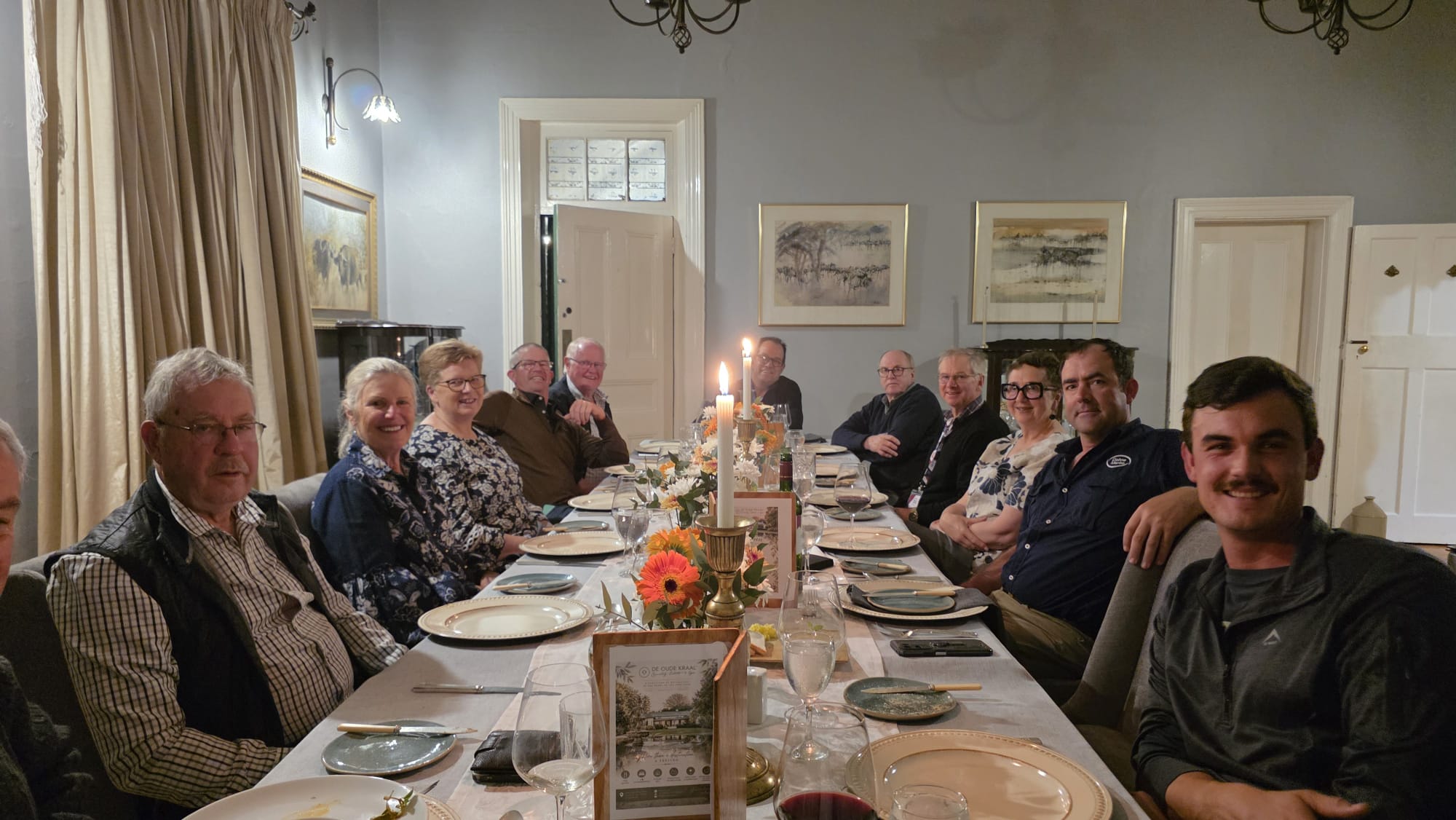
The post-conference travelling party enjoyed a memorable four-course meal at De Oude Kraal. Pictured are Allen Kelly, Margie Pye, Fiona and Darren Cameron, Paul Jackson (South African commercial breeder), Koenas van der Westhuizen (President of SADM), Dr Buks Olivier (geneticist), John Buxton, Liz Hall, Vaughan Collier and JG Goldie. Also joining the group for dinner, but not pictured, were John Morris and Wikus Bekker.
Tuesday 27 October – Crux and Toomfontein Dohnes
At Crux Dohnes, Wikus Bekker showcased his stud breeding programme, ram selection and individual lambing facilities. The group then visited Toomfontein Dohnes, enjoying a traditional spit-roasted Karoo lamb lunch with local farmers. The day concluded with a stop at Gariep Dam before travelling to Waschbank River Lodge.
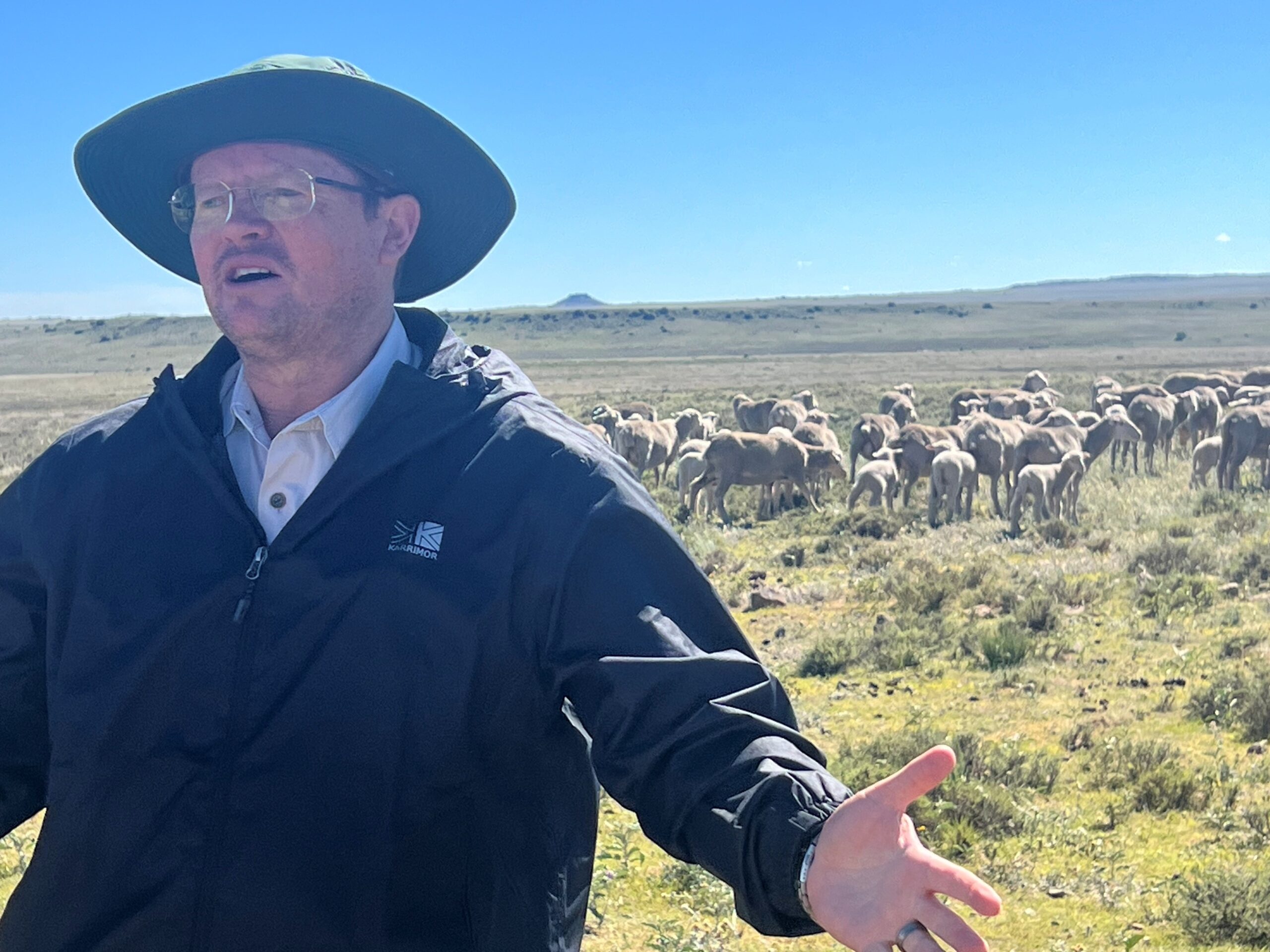
At Crux Dohnes, Wikus Bekker provided delegates with an overview of his stud breeding programme, with stud ewes and lambs on display.
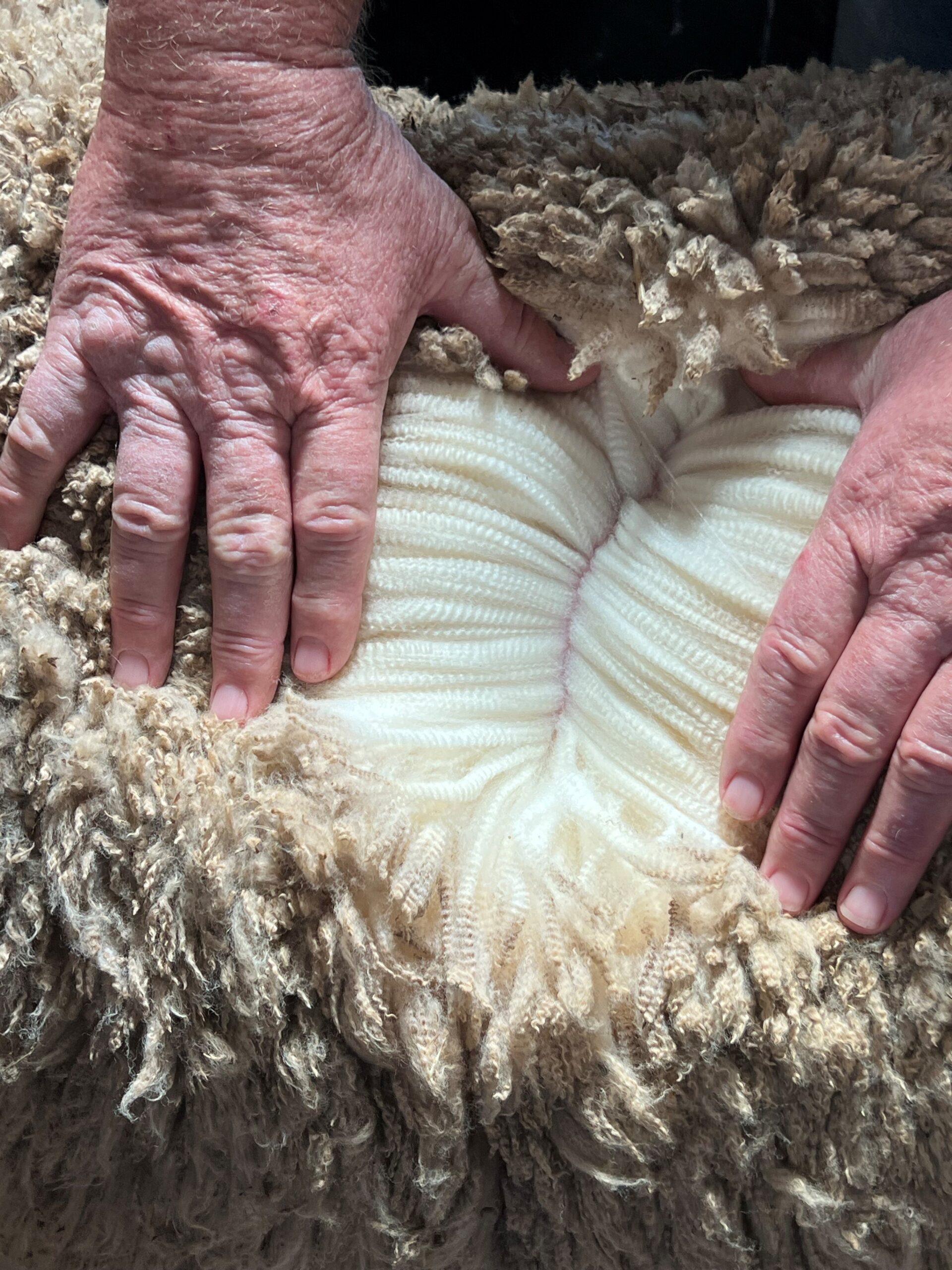
At Crux Dohnes, Wikus Bekker showcased his stud sires, including a close-up view of their wool quality.
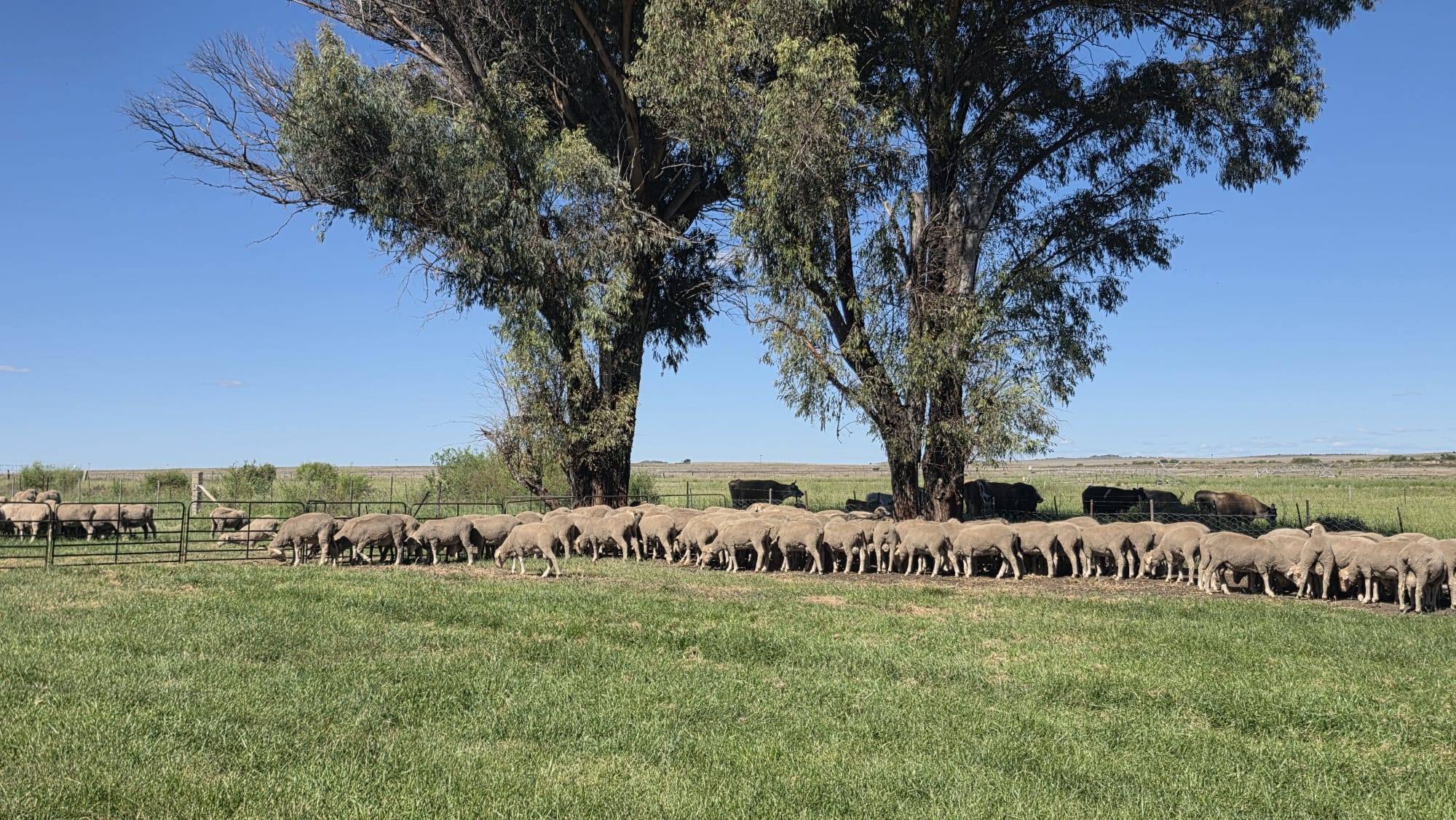
Young rams on display at Toomfontein Dohnes.
Wednesday 28 October – 2 Neefs, Stormberg and White Wools Dohnes The delegation visited 2 Neefs Dohne Stud for brunch, where young sheep are raised under challenging sour-veld conditions, followed by a tour of a commercial lamb feedlot, owned by Steyn Steenkamp. At Stormberg and White Wools Dohnes, delegates inspected lambs sired by Australian Calga Dohne genetics and learnt about the progress of the White Wools embryo transfer programme. The evening concluded at Aloe Grove Farm with a traditional braai featuring dry-aged beef.
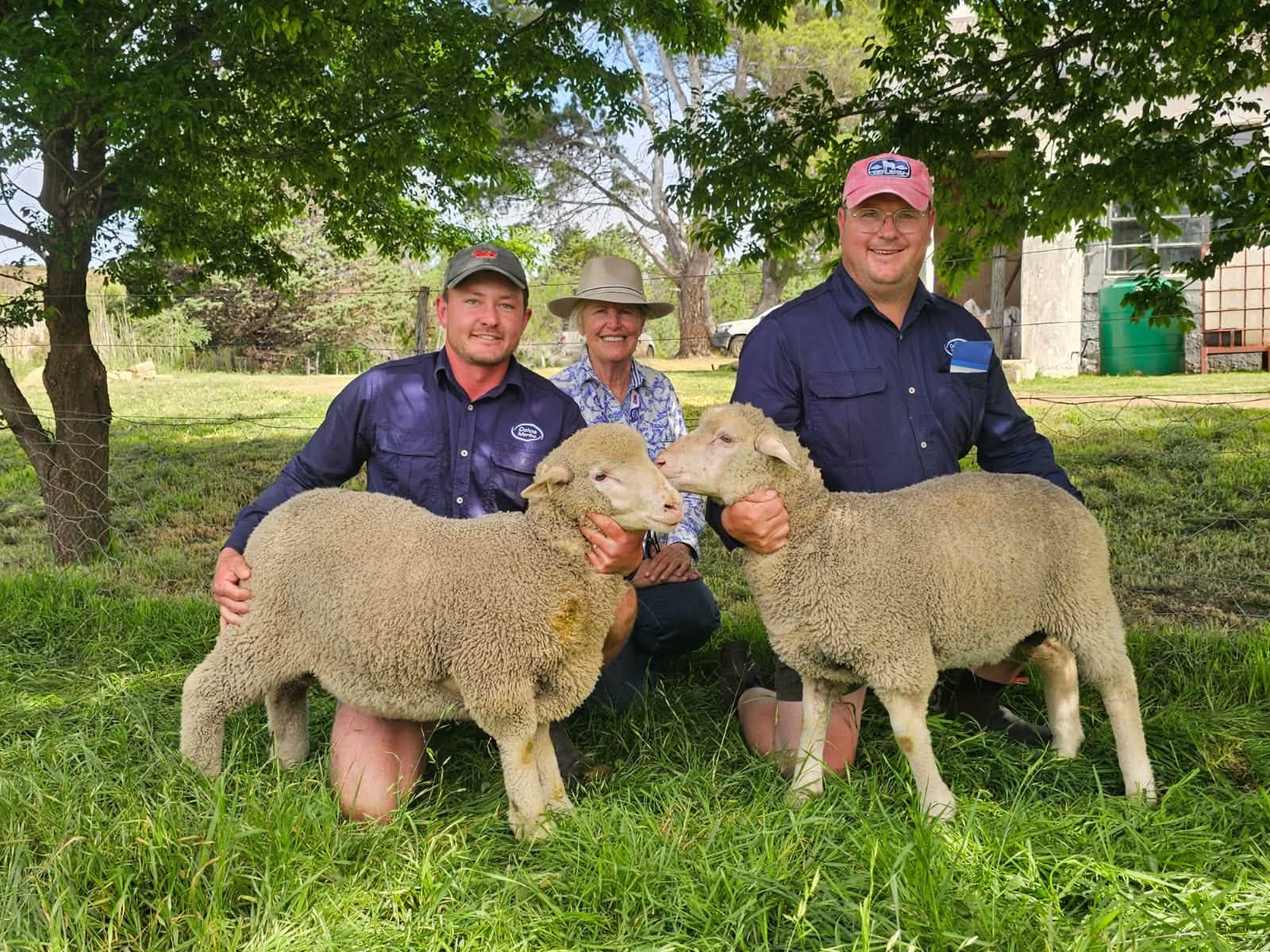
Dohne lambs at White Wools Dohnes, sired by an Australian Calga Dohne ram. DW van Vuuren (White Wools Farm Manager), Margie Pye (Calga Dohnes) and Dries Pienaar (White Wools Owner).
Thursday 29 October – Tweeddale Dohnes and the Eastern Cape
At Richard Armstrong’s Tweeddale Dohnes, delegates inspected sheep adapted to the challenging, high-altitude sour-veld environment. The visit also included discussions and demonstrations involving worm-resistant breeding, group-breeding programmes and feedlot operations. The group travelled to Letsatsi Game Lodge for their final evening together, enjoying a traditional braai prepared over an open fire by our enthusiastic travel companions.
Friday 30 October – Letsatsi Game Lodge and Australie
The final day began with a game drive at Letsatsi Game Lodge, followed by a spectacular breakfast overlooking the Orange and Caledon River valleys towards Lesotho.
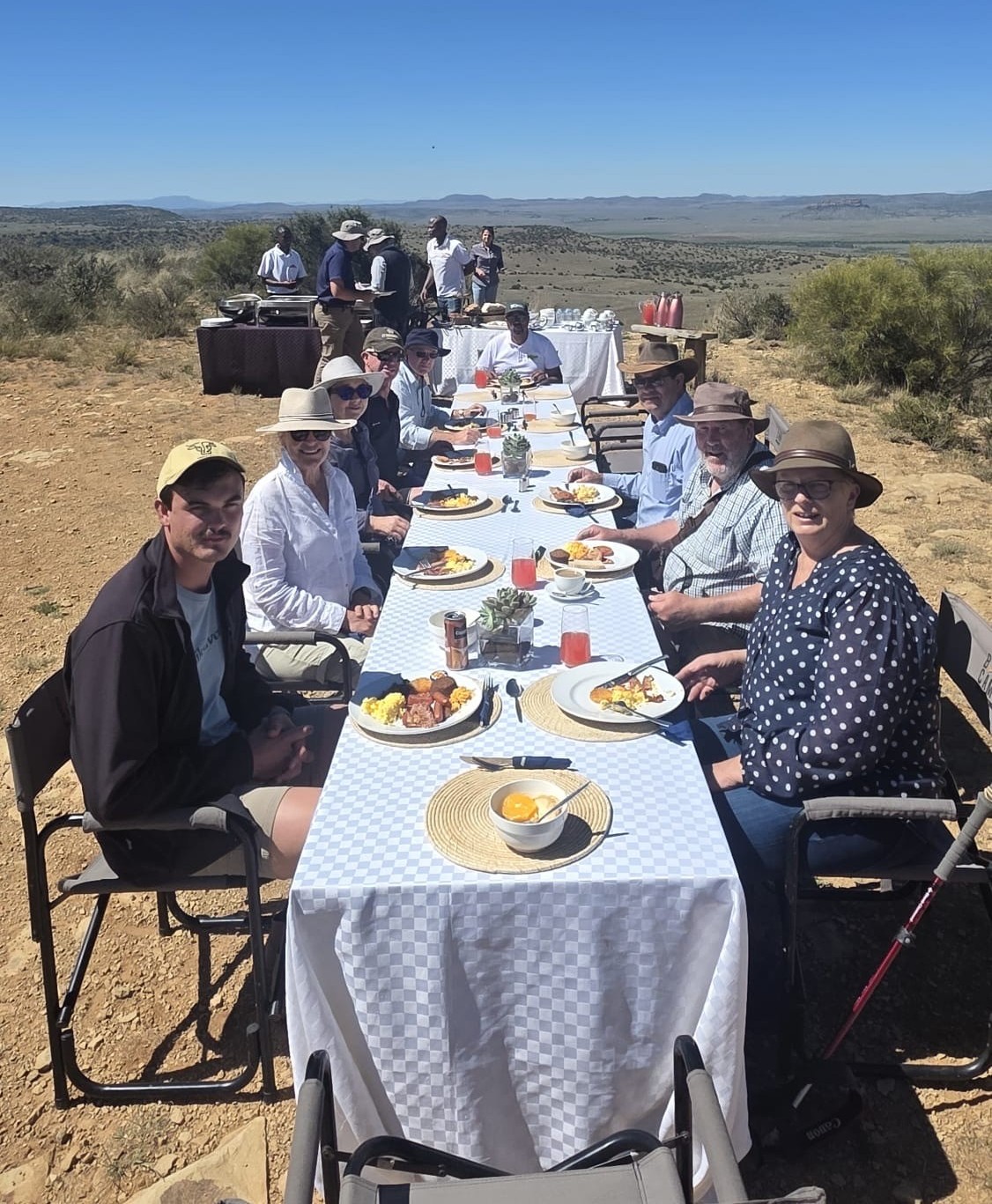
Delegates enjoying breakfast overlooking the Orange and Caledon River valleys, with spectacular views towards Lesotho.
The last farm visit was to Australie, a commercial Dohne enterprise where seasonal management practices had improved flock productivity in challenging grazing conditions.
The delegation then returned to Bloemfontein for their journeys home, bringing an eventful and memorable two-week tour to a close.
John Buxton ADBA Commercial Dohne Breeder




 Facebook
 Twitter
 YouTube
 Instagram